
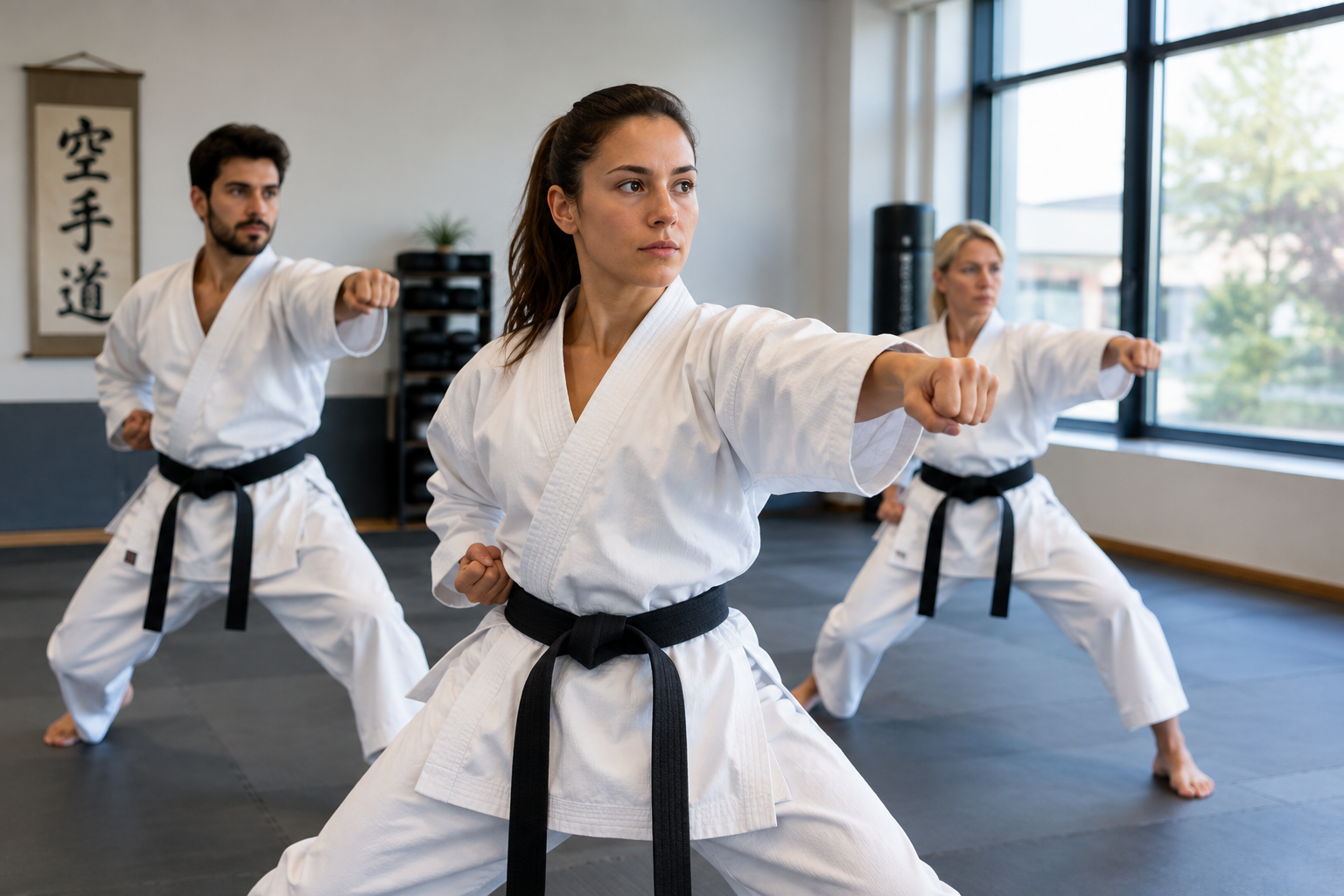
Can an ordinary adult really get a worthwhile workout from karate? The short answer is yes. An adult karate workout can combine cardio, strength, flexibility, balance, coordination, and focused movement in one session. You do not need to be extremely fit, flexible, or experienced before you begin.
Karate can be a practical option for adults who want to become more active while learning a structured skill. Instead of simply repeating the same exercises, training often involves techniques, footwork, combinations, drills, and controlled partner work. This variety can make exercise feel more purposeful.
For someone considering karate for adults, the biggest question is often whether they can keep up. Understanding what beginner training involves can make the first step much easier.
What Does an Adult Karate Workout Involve?
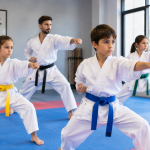
A typical adult karate workout can include several parts. The exact structure depends on the school, instructor, class level, and style.
A beginner session may include:
- A warm-up and mobility exercises
- Basic stances and footwork
- Punches, kicks, blocks, and combinations
- Balance and coordination drills
- Repeated technique practice
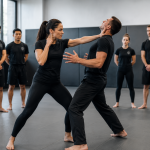
- Partner exercises
- Conditioning exercises
- Cool-down and stretching
This combination can work different areas of fitness during the same class.
For example, repeated combinations can raise your heart rate, while controlled stances and techniques require strength and balance. Footwork adds movement, while stretching and mobility work can support flexibility.
The intensity can also be adjusted. Beginners are usually not expected to perform advanced techniques at full speed from their first class.
Can an Ordinary Adult Start Karate?
Yes. You do not have to be an athlete to start beginner karate.
One of the common misconceptions about karate is that students need to arrive with good fitness, flexibility, or coordination. In reality, these are some of the areas that regular training can help develop.
A beginner may initially find certain movements unfamiliar. That is normal. Your body needs time to learn new patterns.
A good instructor can break techniques into smaller steps. You can then practise them at a suitable pace before adding speed or complexity.
The goal at the beginning is not to keep up with an experienced student. It is to learn the basics safely and gradually build your ability.
Fitness Benefits of Adult Karate
One of the main reasons people consider adult martial arts is fitness.
Karate can provide a mix of aerobic and muscular activity. Moving around the training area, practising combinations, and repeating techniques can increase physical demand throughout a session.
Cardiovascular Fitness
Depending on the class structure, karate drills can raise your heart rate and challenge your stamina.
As you become more comfortable with techniques, you may be able to perform combinations for longer periods. This can gradually increase your ability to handle sustained activity.
The intensity will vary from class to class. Beginners can also take short breaks when needed, particularly when they are new to exercise.
Strength and Muscular Endurance
Karate does not work like traditional weightlifting, but it still requires your muscles to control your body.
Stances can challenge the legs, while controlled punches and kicks require the upper and lower body to work together. Repeated movements can also build muscular endurance.
For broader strength development, karate can be combined with resistance training and other forms of exercise.
Flexibility and Mobility
Flexibility is another area where beginners often notice a difference over time.
Some karate techniques require a useful range of movement in the hips, legs, shoulders, and torso. Warm-ups, mobility drills, and controlled techniques can help you become more comfortable with these movements.
However, you should not expect to perform high kicks immediately.
Flexibility develops gradually. Trying to force a movement before your body is ready can increase the risk of discomfort or injury.
In adult karate training, technique should come before height or speed. As mobility improves, movements can become easier and more controlled.
Coordination and Balance
Karate requires different parts of the body to work together.
You may need to move your feet while positioning your hands, rotate your hips, maintain your stance, and respond to an instructor’s instructions. This makes coordination an important part of training.
Balance also matters. Controlled kicks and changes in stance require you to manage your body position while moving.
For adults who spend much of the day sitting at a desk or following repetitive routines, practising different movement patterns can provide a useful physical challenge.
Can Karate Help With Stress?
Exercise can provide a break from work, screens, and daily responsibilities. Karate adds another element because it requires active attention.
When practising a combination, you need to remember the sequence and focus on your movement. This can help shift your attention away from other tasks for the duration of the session.
The learning process can also be rewarding. Completing a technique that once felt difficult gives you a clear sense of progress.
This is one of the potential benefits of adult karate beyond physical fitness. The class becomes time set aside for movement, concentration, and skill development.
What Progress Looks Like for Beginners
Progress in karate is not simply about becoming faster or stronger.
A beginner may first work on basic stances and individual techniques. Later, those techniques can be combined into sequences or drills.
Over time, you may notice that:
- Basic movements feel more natural
- Your balance improves
- You recover more easily between drills
- Your coordination becomes better
- You understand instructions more quickly
- Your technique becomes more controlled
- You can handle longer or more complex combinations
This gradual progression is important because karate is a skill-based form of exercise.
You are not only training your body. You are also learning how to use it more efficiently.
How Hard Is Karate for a Beginner?
The first few classes may feel challenging, especially if you have not exercised regularly.
You might feel tired after a session because you are using muscles and movement patterns that are not part of your usual routine.
That does not mean you need to be in shape before joining.
In most karate classes for adults, beginners can focus on learning the fundamentals rather than matching the pace of advanced students.
As your fitness improves, the same exercises may become easier. Instructors can then introduce more complex movements, longer combinations, or higher training demands.
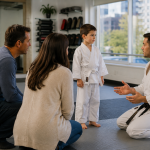
What Should You Wear to Your First Class?
Your first class does not always require a full karate uniform.
If you are attending a trial or introductory session, ask the school what clothing is suitable. Comfortable exercise clothing is often appropriate for an introductory class.
Once you decide to continue, the instructor can explain what uniform and equipment you need.
You should also bring water and arrive early enough to understand the class rules and meet the instructor.
How Often Should Adults Train?
The ideal frequency depends on your schedule, current fitness, and goals.
For many beginners, starting with a manageable schedule is better than training too often and struggling to maintain it.
Consistency matters because karate is a skill that develops through repetition.
For example, regular adult karate classes can give you repeated opportunities to practise the same techniques. Over time, you can build both physical fitness and technical ability.
If you already follow another exercise routine, karate can complement activities such as walking, running, cycling, strength training, or mobility work.
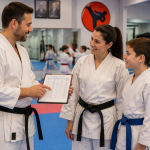
Choosing Adult Karate Classes
If you are comparing adult karate classes, look beyond the timetable.
Consider the teaching environment, class structure, instructor experience, beginner support, and overall approach to training.
A suitable program should make beginners feel comfortable asking questions and learning at their own pace.
You may also want to ask:
- Are beginner sessions available?
- How are new students introduced to techniques?
- What should I bring to my first class?
- How long are typical sessions?
- What fitness level is expected?
- Are classes available at convenient times?
- What progression system does the program use?
Villari’s Martial Arts Centres provides structured martial arts training for adults who want to develop skills while working toward their fitness and personal goals.
Is an Adult Karate Workout Worth It?
For adults looking for a workout that combines exercise with skill development, karate can be a worthwhile option.
An adult karate workout can challenge your cardiovascular fitness, muscular endurance, flexibility, balance, and coordination. It can also give you a structured activity that requires focus and provides measurable progress.
The biggest advantage for beginners may be that you do not need to arrive fully prepared. You can develop many of the required skills through training.
The important factor is choosing an appropriate program and approaching your first sessions with realistic expectations.
Final Thoughts
Starting karate as an adult does not require you to be exceptionally fit, flexible, or coordinated. Those qualities can develop as you train.
The adult karate workout experience can combine physical conditioning with technique, concentration, flexibility, balance, and skill progression. It can also provide a structured way to stay active without relying on a traditional gym routine.
If you are considering karate for adults, focus on finding a class that supports beginners and gives you room to progress. With regular practice and patient instruction, your first few classes can become the starting point for a long-term training routine.
FAQs
1. Is karate a good workout for adults?
Yes. Karate can combine cardio, muscular endurance, balance, coordination, flexibility, and mobility. The intensity depends on the class and the student’s experience.
2. Do I need to be fit before starting karate?
No. Beginners can start at their current fitness level. Fitness and technique can develop gradually through regular training.
3. Is beginner karate difficult?
The first few sessions may feel challenging because the movements are new. However, instructors can break techniques into manageable steps so beginners can learn progressively.
4. Can karate improve flexibility?
Karate training can involve mobility exercises, stretching, and movements that use a range of motion. Flexibility generally develops gradually through consistent practice.
5. Can adults learn karate if they have never trained before?
Yes. Many programs offer instruction suitable for beginners. Previous martial arts experience is not normally required for an introductory class.
0 Comments