Self-Defense Myths Debunked: What Actually Works When It Matters
Personal safety is often discussed through dramatic stories, movies, and social media clips. This can make it difficult to separate useful advice from popular myths. For people considering self defense classes Canada, understanding what actually works is an important first step.
Effective self-defence is not about becoming unbeatable or winning every confrontation. It is about improving awareness, making safer choices, managing stress, and learning practical responses that can help when a situation becomes threatening.
Good self-defence training also recognises that every situation is different. There is no single technique that guarantees safety. Instead, effective training gives people a range of skills that can be applied according to the circumstances.
Myth 1: Self-Defense Is All About Fighting
One of the most common misconceptions is that self-defence means learning how to fight.
In reality, physical techniques are only one part of personal safety. Awareness and avoidance often play a much bigger role.
A person who notices warning signs early may have more opportunities to leave an uncomfortable situation before it becomes dangerous. Recognising unusual behaviour, maintaining appropriate distance, and staying aware of surroundings can all support better decision-making.
Physical skills still matter. However, they should be viewed as part of a wider safety strategy rather than the entire solution.
What Actually Works?
Effective self defense training Canada programs should cover awareness, communication, positioning, movement, and physical skills. The goal is to help students understand when to avoid conflict and when physical action may become necessary.
This approach is more realistic than treating every situation as a competition.
Myth 2: There Is One Perfect Self-Defense Technique
Another popular myth is that one secret move can stop any attacker.
Real-world situations rarely work that way.
People vary in size, strength, mobility, experience, and reaction speed. The environment also changes from one situation to another. A technique that works in one setting may not be suitable in another.
For this reason, good training focuses on principles rather than relying on one magic technique.
Students may learn how to maintain balance, create space, protect vulnerable areas, move away from danger, and respond under pressure. These principles can be adapted when circumstances change.
This is one reason structured self defense classes Canada can be valuable. Repeated practice helps students understand how different skills connect rather than memorising isolated movements.
Myth 3: Strength Is the Most Important Factor
Strength can be useful, but it is not the only factor in personal safety.
A smaller person may still benefit from good positioning, timing, awareness, balance, and technique. Likewise, someone who is physically strong can make poor decisions if they panic or fail to recognise danger.
Effective self-defence education should therefore focus on skills that can be developed through practice.
Technique, Timing and Awareness Matter
Training can help people become more familiar with movement and distance. It can also improve their ability to stay composed while making decisions.
This does not mean training eliminates fear. Instead, regular practice can make unfamiliar situations feel less overwhelming because the student has already worked through controlled scenarios.
That preparation can be useful for people of different ages and experience levels.
Myth 4: Self-Defense Training Makes People Aggressive
Some people avoid martial arts because they believe learning self-defence encourages aggressive behaviour.
The opposite can often be true when training is taught responsibly.
A well-structured martial arts environment can place strong emphasis on discipline, control, respect, and responsibility. Students learn that physical skills should not be used simply to prove strength or dominate others.
The purpose of self-defence is protection, not aggression.
For this reason, reputable self defense training Canada should teach students to assess situations carefully. Knowing how to respond does not mean looking for conflict. In many cases, the best outcome is to avoid it completely.
Myth 5: Women’s Self-Defense Classes Are Only About Physical Techniques
Women’s self defense classes are sometimes presented as programmes focused entirely on fighting techniques.
A more useful approach recognises the wider range of challenges that women may encounter.
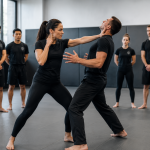
Training can include awareness, boundary setting, verbal communication, movement, escape strategies, and physical skills. It can also help participants understand how distance and positioning affect their options.
The aim is not to create fear. Instead, the goal is to develop practical knowledge and confidence.
Confidence Should Come From Preparation
Confidence in self-defence should not mean believing that nothing bad can happen.
Healthy confidence comes from understanding what you can control. This includes paying attention to your surroundings, recognising uncomfortable behaviour, setting boundaries, and knowing when to seek help.
Physical training adds another layer of preparation.
When people practise movements repeatedly in a controlled environment, they can become more comfortable responding to pressure. This is more useful than simply watching demonstrations online.
Myth 6: Real Self-Defense Looks Like the Movies
Movies often portray self-defence as a sequence of impressive moves. The defender remains calm, performs several techniques, and quickly defeats the attacker.
Real situations are much less predictable.
There may be limited space, poor lighting, uneven ground, multiple people, or unexpected movement. Stress can also affect perception and coordination.
That is why realistic training should not depend on perfect conditions.
Students benefit from learning simple concepts that can be adjusted to different environments. They should also understand that escape and seeking assistance are often safer goals than trying to overpower someone.
Myth 7: You Need Years of Martial Arts Experience to Benefit
Another misconception is that self-defence only helps people who have trained for years.
Long-term practice can certainly develop greater skill. However, beginners can still learn valuable principles from the early stages of training.
Introductory classes can teach basic awareness, movement, positioning, and defensive concepts. As students continue, they can build greater familiarity and control.
The key is consistency.
Like many practical skills, self-defence becomes easier to understand when people practise regularly rather than relying on a single seminar or online video.
What Effective Self Defense Classes Canada Should Teach
When evaluating self defense classes Canada, look beyond impressive demonstrations. Consider what the programme actually teaches and how students are expected to apply those skills.
A well-rounded programme may include:
- Situational awareness and risk recognition
- Verbal communication and boundary setting
- Safe positioning and movement
- Basic defensive techniques
- Escape and disengagement strategies
- Stress management and controlled practice
- Respect, discipline, and responsible use of skills
- Training that can be adapted to different abilities
The learning environment matters too. Students should feel encouraged to ask questions and develop skills at a suitable pace.
A strong instructor should also explain the purpose behind each technique. Understanding why a movement works can help students make better decisions when circumstances change.
Why Regular Practice Matters
Knowing a technique in theory is different from being able to use it under pressure.
This is why repetition plays such an important role in self defense training Canada. Practice allows students to become familiar with movement while receiving feedback from instructors.
Over time, training can help develop better coordination and awareness.
Controlled drills can also introduce a level of pressure without creating unnecessary danger. This gives students an opportunity to practise decision-making rather than simply memorising movements.
However, training should always remain appropriate for the student’s age, ability, and experience.
The Role of Martial Arts in Personal Safety
Martial arts can provide a structured environment for developing physical and mental skills.
At Villari’s Martial Arts Centers, the principles of martial arts can support a broader understanding of discipline, awareness, confidence, and responsible training.
The value of martial arts extends beyond physical techniques. Regular practice can encourage focus, patience, coordination, and respect.
These qualities can contribute to a more balanced approach to personal safety.
A Practical Approach to Personal Safety
There is no guaranteed formula for avoiding every dangerous situation. However, people can take practical steps to improve their preparation.
Start by paying attention to your surroundings. Trust your instincts when something feels wrong. Maintain reasonable boundaries and avoid unnecessary confrontation.
If a situation becomes threatening, prioritise creating distance and getting to a safer location when possible. Seek help from others or contact emergency services when appropriate.
Training can complement these habits by giving you additional skills to draw upon.
The most useful mindset is not, “How can I win a fight?” It is, “How can I stay safe and get away?”
That shift is at the heart of responsible self-defence education.
Choosing the Right Self Defense Classes Canada
When comparing self defense classes Canada, look for programmes that take a balanced approach.
Consider the instructor’s experience, the training environment, the range of skills covered, and whether lessons are suitable for your current ability.
It is also worth asking whether the programme focuses on practical decision-making rather than unrealistic promises.
Be cautious of anyone claiming that a particular technique will work every time. Self-defence involves uncertainty, and responsible instructors should acknowledge that.
The best programmes help students understand both their abilities and their limitations.
Final Thoughts
Self-defence is not about becoming fearless or learning a perfect technique. It is about preparation, awareness, sound judgement, and practical skills.
Many common myths focus too heavily on fighting. In reality, effective personal safety often starts before physical contact ever occurs.
Whether someone chooses general self defense classes Canada, specialised women’s self defense classes, or broader self defense training Canada, the goal should remain the same: develop useful skills while promoting awareness, confidence, discipline, and responsible decision-making.
Understanding what self-defence can and cannot do is just as important as learning the techniques themselves. With realistic instruction and consistent practice, people can become better prepared to recognise risks, make informed choices, and respond more effectively when it matters. Contact us to learn more about self-defence training and how you can get started.
Frequently Asked Questions
1. What should I expect from self defense classes Canada?
Classes may cover awareness, movement, positioning, communication, defensive techniques, and escape strategies. The exact structure depends on the training programme and student level.
2. Are self defense classes suitable for beginners?
Yes. Beginners can learn fundamental concepts without having previous martial arts experience. Training typically progresses as students become more comfortable with the skills.
3. What is taught in women’s self defense classes?
Women’s self defense classes may cover awareness, boundary setting, verbal responses, positioning, physical defence, and escape strategies. The focus should be practical preparation rather than encouraging confrontation.
4. Does self-defense training make people aggressive?
Responsible training does not aim to encourage aggression. It can promote discipline, control, awareness, and responsible decision-making.
5. Is strength necessary for self-defense?
Strength can help, but it is not the only factor. Awareness, positioning, timing, balance, technique, and decision-making are also important elements of personal safety.
6. How often should I practise self-defense?
Regular practice is generally more useful than occasional training. Consistent lessons allow students to reinforce movement patterns and become more comfortable applying what they learn.