The Karate Belt Ranking System Explained: What Each Belt Actually Means
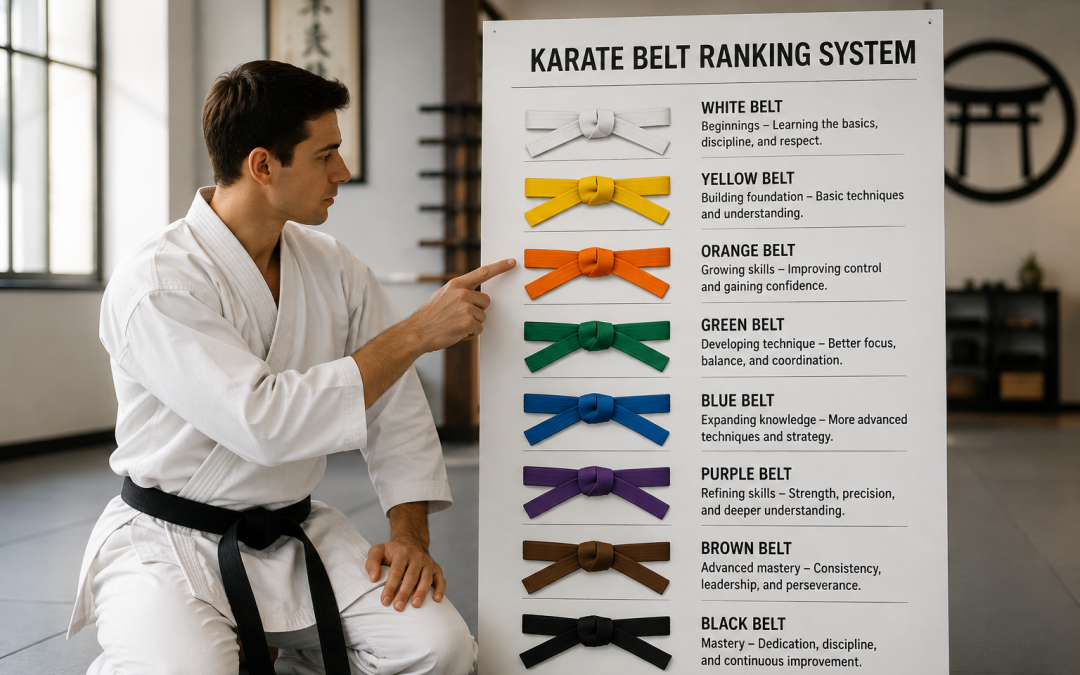
For students and parents considering martial arts training programs, the belt system can be one of the most interesting parts of the journey. A belt is not simply a colour worn around the waist. It represents progress, effort, skill development, discipline, and the ability to apply what a student has learned.
At Villaris Martial Arts Centres, students follow a structured learning path designed to develop technical skills, confidence, fitness, self-defence abilities, and character. The progression gives students clear goals while allowing instructors to assess development at each stage.
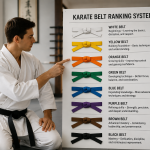
However, it is important to understand that belt colours and grading requirements can vary between martial arts schools and styles. The meaning behind progression is often more important than the colour itself.
Why Do Martial Arts Training Programs Use Belts?
A belt system gives students a clear way to measure their progress. Martial arts can involve many techniques, from basic stances and strikes to more advanced combinations and self-defence movements. Without a structured system, it can be difficult for students to see how far they have come.
A belt can provide a visible reminder of that progress.
For younger students, this can also make training more engaging. Reaching the next level creates a realistic goal to work towards. Adults can benefit in the same way, especially when they are starting martial arts for the first time.
A good ranking system also encourages students to focus on learning rather than rushing ahead. Each level should build on skills learned previously.
What Does a White Belt Mean?
The white belt traditionally represents the beginning of a student’s martial arts journey. It is the stage where students become familiar with the basic principles of training.
A new student may learn:
- Basic stances and movement
- Fundamental strikes and kicks
- Simple blocks
- Balance and coordination
- Class etiquette
- Basic self-defence concepts
- How to listen and respond to instruction
At this stage, the goal is not perfection. Beginners are learning how to move correctly and understand the expectations of martial arts training.
For parents, this stage is also useful because it allows children to build confidence gradually. They do not need previous experience to get started. Villaris states that beginners are welcome and that fundamental techniques are taught step by step.
What Do Intermediate Belts Represent?
As students progress, the focus shifts from simply learning individual movements to combining techniques and applying them with better control.
Intermediate belts generally represent a growing level of:
- Technical knowledge
- Physical control
- Coordination
- Focus
- Confidence
- Discipline
- Self-defence awareness
Students are expected to remember more techniques and perform them with greater accuracy.
This stage can also teach an important lesson: progress does not always happen at the same speed. Some techniques may feel easy, while others require repeated practice.
That experience can help students understand the value of patience and consistent effort.
How Martial Arts Training Programs Build Progress
Effective martial arts training programs do not treat belt advancement as simply learning a list of movements. Progress should involve several areas of development.
Technical Development
Students need to demonstrate that they understand the techniques required at their current level. This includes proper movement, balance, timing, and control.
Physical Development
Martial arts training can improve fitness, flexibility, coordination, strength, and endurance. Villaris’ programs are designed for different age groups and experience levels, with fitness and physical conditioning forming part of the training experience.
Mental Development
Students also learn to focus during lessons. They must listen, remember instructions, correct mistakes, and stay engaged.
Character Development
Perhaps the most important part of progression is character. Students are encouraged to develop qualities such as discipline, responsibility, perseverance, honesty, and respect.
This is why a belt should never be viewed as a reward for attendance alone.
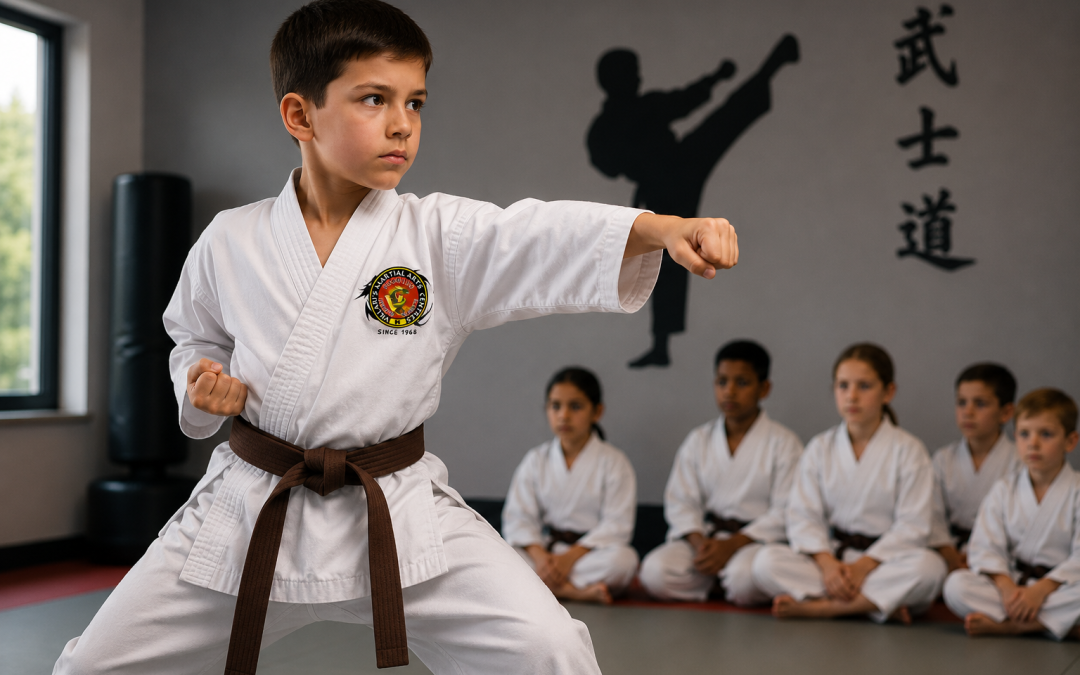
What Does a Brown Belt Represent?
In many karate systems, brown belts are associated with advanced student development. By this point, students have usually spent considerable time building their foundations.
The emphasis often shifts towards refinement.
A student may be expected to demonstrate:
- Stronger technical control
- Better timing and accuracy
- Improved physical conditioning
- Greater awareness during partner work
- More consistent discipline
- A deeper understanding of self-defence principles
At this level, students may also begin to understand that knowing a technique and performing it effectively are two different things.
Repeated practice helps turn knowledge into skill.
What Does a Black Belt Actually Mean?
A black belt is often seen as the final destination of martial arts. In reality, it is better understood as an important milestone.
Earning a black belt does not mean that a student knows everything. Instead, it demonstrates a strong foundation, commitment, technical development, and the ability to continue learning at a more advanced level.
For many students, reaching this stage requires years of regular training.
A black belt can represent:
- Long-term commitment
- Consistent practice
- Self-discipline
- Technical proficiency
- Mental resilience
- Personal growth
- Respect for the martial arts
The most valuable achievement may not be the belt itself. It is the person the student becomes while working towards it.
Is Every Karate Belt the Same?
No. This is an important point for parents and prospective students.
Different martial arts schools may use different belt colours, ranking structures, grading intervals, and requirements. Even schools teaching related styles may organise their progression differently.
Therefore, students should not assume that a particular colour always represents exactly the same level everywhere.
The martial arts training programs at Villaris follow a structured progression. The school’s curriculum is designed to introduce techniques step by step while providing measurable achievements and advancement.
This approach helps instructors assess students based on their actual development rather than simply the amount of time they have attended.
What Happens During a Belt Assessment?
A belt assessment is an opportunity for an instructor to evaluate whether a student is ready for the next stage.
Depending on the student’s level, assessment may consider:
- Technique: Can the student perform the required movements correctly?
- Control: Can techniques be performed safely and with appropriate control?
- Knowledge: Does the student understand the techniques being taught?
- Fitness: Can the student complete the physical requirements of their level?
- Focus: Can the student remain attentive throughout training?
- Attitude: Does the student show respect, discipline, and a willingness to learn?
This broader approach helps make belt progression meaningful.
Why Belt Progression Matters for Children
For children, martial arts progression can provide lessons that extend beyond the dojo.
A child may initially struggle with a technique. With regular practice, they eventually improve. That experience can teach them that mistakes are part of learning.
They also learn that improvement requires effort.
The benefits can include:
- Greater confidence
- Improved concentration
- Better coordination
- Increased discipline
- Greater respect for others
- Stronger perseverance
- More confidence when facing challenges
Villaris’ children’s programs focus on skills such as discipline, confidence, respect, coordination, fitness, and self-defence in an encouraging environment.
Martial Arts Classes Canada: What Should Parents Look For?
When comparing martial arts classes Canada families should look beyond the belt colours.
A strong program should provide clear instruction and a safe environment. Parents should also consider the experience of instructors, class structure, age-appropriate teaching, and how student progress is measured.
Ask questions such as:
- Is the curriculum clearly structured?
- Are beginners supported?
- Are children taught according to their age and ability?
- Does the program focus on character as well as technique?
- Are instructors properly trained?
- Can parents understand how progression works?
Villaris offers programs for children, teens, adults, and families, with instruction adapted to age, experience, fitness, and individual goals.
How Shaolin Kempo Karate Canada Fits Into Belt Progression
Students interested in Shaolin Kempo Karate Canada may also want to understand how the style approaches martial arts development.
Shaolin Kempo Karate combines elements associated with Shaolin Kung Fu, Kempo, traditional Karate, Western boxing, Jujutsu, Chin Na, and grappling arts.
This creates a broad training system that includes striking, kicking, movement, self-defence, and grappling concepts.
At Villaris, this training is supported by a structured curriculum that develops students progressively. The goal is to help students build practical skills while also developing mental focus and personal discipline.
Belt Colour Is Only One Part of the Journey
It is easy to focus on the colour around a student’s waist. However, the real value of martial arts progression lies in what happens between each grading.
A student who earns a new belt has hopefully gained more than another colour. They have spent time learning, practising, making mistakes, improving, and becoming more confident.
For parents, this is one reason to look closely at the teaching philosophy behind different martial arts training programs.
The right program should make progression understandable while keeping the focus on genuine development.
Final Thoughts
The karate belt ranking system provides students with a clear path through their martial arts journey. From the first lessons as a beginner to the discipline required for advanced training, every stage offers an opportunity to learn and improve.
While belt colours can differ between schools, the core idea remains valuable: progress should reflect consistent effort, growing skill, personal discipline, and a willingness to keep learning.
At Villaris Martial Arts Centres, structured progression is combined with fitness, self-defence, confidence, and character development. The school offers children’s, adult, and family programs for students at different experience levels.
For anyone considering martial arts training programs, understanding the ranking system is a useful first step. More importantly, prospective students and parents should choose a school where instructors explain the journey clearly and support students throughout every stage.
FAQs
1. How long does it take to earn a black belt?
There is no single timeframe that applies to every student. Progress depends on factors such as attendance, practice, skill development, fitness, and the school’s grading structure.
2. Do beginners need martial arts experience?
No. Beginners can start without previous martial arts experience. Villaris specifically welcomes beginners and teaches fundamental techniques step by step.
3. Are belt colours the same in every karate school?
No. Belt colours, grading systems, and requirements can vary between martial arts styles and schools. It is best to ask the individual school about its ranking structure.
4. Is karate suitable for children?
Yes. Age-appropriate karate programs can help children develop coordination, fitness, confidence, discipline, focus, and self-defence skills. Villaris offers children’s martial arts programs designed around these areas.
5. Can adults start martial arts training as beginners?
Yes. Adults do not need previous experience to begin. Villaris offers adult programs for different fitness and experience levels, with an emphasis on self-improvement, conditioning, confidence, and self-defence.