Choosing a martial arts programme for your child is about more than finding a convenient class time. Parents want a school where children can learn useful skills, stay active, build confidence, and feel supported. If you are researching karate classes North York families can consider, having a clear checklist can make the process much easier.
Every karate school has its own teaching style, class structure, and approach to working with children. Visiting a school and asking the right questions can help you decide whether it suits your child’s age, personality, and goals.
This guide covers the key factors North York parents should consider before enrolling their child.
1. Check the Instructor’s Experience
The instructor can have a major influence on your child’s experience. Look for teachers who have strong martial arts knowledge and understand how to work with children.
Teaching children requires more than knowing karate techniques. Instructors should be able to explain movements clearly, maintain an organised class, and encourage students without creating unnecessary pressure.
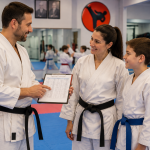
During a visit, watch how instructors interact with students. Do they give clear instructions? Do they correct mistakes respectfully? Do children appear engaged and comfortable?
These observations can tell you a lot about the school’s teaching approach.
Why Teaching Style Matters
Children learn differently from adults. Younger students often need simple instructions, repetition, encouragement, and activities that keep them focused.
A good karate school North York parents choose should create an environment where children can learn at an appropriate pace.
2. Look at the Class Structure
Before choosing a school, ask how classes are organised.
Age and experience can affect how children learn. A beginner should not necessarily train in the same way as an advanced student. Well-organised programmes often group students according to age, experience, or skill level.
Ask about:
Class length
Age groups
Beginner programmes
Skill levels
Number of students per class
Progression between levels
Frequency of classes
The structure should be easy for parents to understand.
It should also give children enough time to practise skills while keeping lessons engaging.
3. Evaluate Safety Practices
Safety should be one of the first things parents consider when comparing kids karate classes North York options.
Karate involves physical movement, so children need appropriate supervision and a suitable training environment.
Look around the facility when you visit. Is the training area clean and well maintained? Is there enough space for students to move safely? Are children supervised throughout the class?
It is also reasonable to ask how instructors manage contact, falls, and physical drills.
A responsible school should have clear safety expectations and age-appropriate training methods.
4. Consider the School’s Approach to Children
A karate programme should support children’s development rather than focus only on physical techniques.
For many parents, qualities such as respect, discipline, patience, focus, and confidence are important reasons for choosing martial arts.
Pay attention to how these values appear during class.
For example, instructors may expect students to listen when others are speaking, treat training partners respectfully, and take responsibility for their equipment and behaviour.
These small habits can become an important part of the learning experience.
5. Visit Before You Enrol
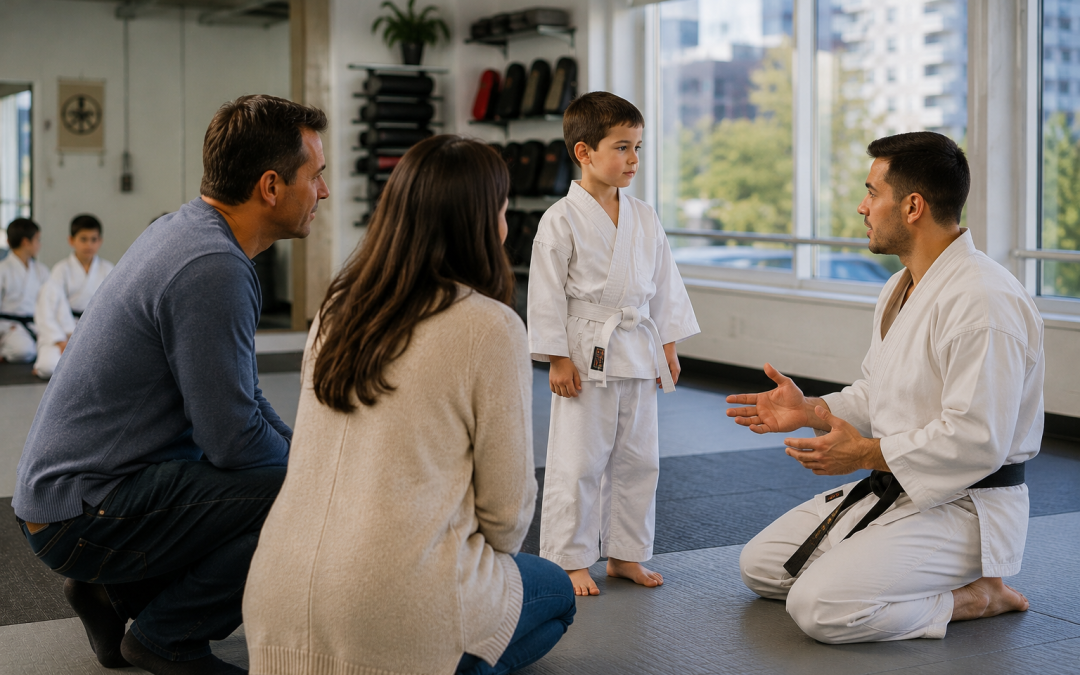
Online research can help you create a shortlist, but visiting a karate school North York location can give you information that a website cannot.
Ask whether you can observe a class or speak with an instructor before making a decision.
During your visit, consider:
How instructors communicate with students
Whether children seem engaged
How beginners are supported
Whether the class feels organised
How instructors manage different ability levels
Whether the environment feels welcoming
Your child’s reaction matters too.
A programme may look excellent on paper, but your child should also feel comfortable with the instructors and environment.
6. Ask About Trial Classes
If a school offers a trial class or introductory session, it can be a useful way to evaluate the programme.
A trial gives your child an opportunity to experience the teaching style and class environment. It also lets you see how the instructor works with new students.
Afterwards, ask your child simple questions.
Did they enjoy the class? Did they understand the instructor? Did they feel comfortable? Would they like to return?
Their answers can provide valuable insight into whether the programme is a good fit.
7. Review the Progression System
Parents should understand how children progress through the programme.
Many martial arts schools use a belt system or another structured method to recognise development. However, the system should be more than a way to collect new belts.
Ask what students are expected to learn at each stage.
A useful progression system can give children clear goals. It can also help instructors track development and identify areas that need more practice.
Progress should not be rushed simply to move students to the next level.
The focus should remain on learning and developing skills properly.
8. Think About Your Child’s Goals
Not every child joins karate for the same reason.
One child may want to become more active. Another may be interested in martial arts itself. Some children may want to improve focus, confidence, coordination, or discipline.
Before choosing kids karate classes North York, think about what you and your child want from the programme.
Then ask the instructor how the programme supports those goals.
A good school should be able to explain what children can expect to learn without making unrealistic promises.
9. Check Class Times and Location
Practical factors matter.
Even an excellent karate programme may not work if its schedule conflicts with school, family commitments, or other activities.
Look at the weekly timetable and consider how easily your child can attend consistently.
For North York families, travel time can also affect long-term commitment. A convenient location may make it easier to maintain a regular routine.
Consistency is important in martial arts because children need repeated practice to build familiarity and confidence.
10. Understand the Costs
Parents should have a clear understanding of the total cost before enrolling.
Ask about tuition, registration fees, uniforms, grading fees, equipment, and any other expected expenses.
Do not judge a school based only on the lowest price.
Instead, consider what is included in the programme and whether the overall experience matches your family’s needs.
Transparency is important. A reputable school should be comfortable explaining its fees and policies before you commit.
11. Look for a Positive Learning Environment
Children spend a significant amount of time in their martial arts classes. The atmosphere can therefore have a major impact on whether they enjoy learning.
A positive environment should encourage effort and improvement.
Children should understand that making mistakes is a normal part of learning. Instructors can challenge students while still providing support.
This balance is particularly important for younger beginners.
The best karate classes North York parents consider should give children room to develop confidence without creating unnecessary fear of failure.
12. Consider the Long-Term Experience
Parents should think beyond the first few classes.
Ask what happens as children become more experienced. Are there opportunities to develop more advanced skills? Can students continue progressing as they get older?
A school that offers a clear long-term pathway can help children maintain interest.
It can also provide a familiar environment as their abilities develop.
For some families, this continuity is an important advantage because children can build relationships with instructors and classmates over time.
A Simple Parent’s Checklist
Before making your decision, use this quick checklist:
What to Check
Questions to Ask
Instructors
Are teachers experienced with children?
Class structure
Are groups organised by age or ability?
Safety
Is training supervised and age appropriate?
Teaching style
Are instructions clear and encouraging?
Progression
How do students develop their skills?
Environment
Does the school feel welcoming?
Schedule
Can your child attend consistently?
Costs
Are all fees explained clearly?
Trial class
Can your child experience a class first?
Long-term fit
Can the programme support continued learning?
Using this checklist can help parents compare schools based on factors that actually affect their child’s experience.
Why the Right Fit Matters
There is no single karate school that will be perfect for every child.
Some children thrive in a highly structured environment. Others may need more encouragement before they become comfortable. Age, personality, confidence, previous experience, and personal goals can all influence the right choice.
That is why visiting schools and asking questions is so valuable.
When considering karate classes North York, parents should look for a programme that combines skilled instruction, appropriate safety practices, clear progression, and a positive learning environment.
Villari’s Martial Arts Centers provides a martial arts setting where students can work on their skills while developing values such as discipline, focus, confidence, and respect.
Ultimately, the goal is not simply to find a class that fits your schedule. It is to find an environment where your child feels motivated to learn and has the opportunity to grow.
Final Thoughts
Choosing martial arts training programs is an important decision for any parent. The right programme can become a positive part of a child’s weekly routine and support development both inside and outside the training environment.
If you are comparing karate school North York options, take your time. Visit the school, observe a class, meet the instructors, ask about safety, and consider your child’s own response to the environment.
Most importantly, look beyond flashy demonstrations or quick promises. Focus on teaching quality, consistency, respect, safety, and the overall experience.
With the right programme, karate can give children more than physical skills. It can provide a structured setting where they practise patience, develop confidence, learn to work towards goals, and build habits that can support them as they grow.
Frequently Asked Questions
1. What should parents look for in a karate school?
Parents should consider instructor experience, class structure, safety, teaching style, school culture, progression, schedule, cost, and whether the programme suits the child’s needs.
2. Are kids karate classes North York suitable for beginners?
Yes. Beginner programmes are designed to introduce children to basic martial arts skills and help them become comfortable with the training environment.
3. How can I choose the right karate school North York for my child?
Visit the school, observe a class, speak with instructors, ask about safety and progression, and consider whether the environment matches your child’s personality and goals.
4. Should my child try a class before enrolling?
If a trial or introductory class is available, it can be helpful. Your child can experience the teaching style and decide how comfortable they feel.
5. How often should children attend karate classes?
The ideal schedule depends on the child’s age, goals, and family routine. Consistent attendance is generally more useful than attending sporadically.
6. Does karate teach more than physical techniques?
Yes. A well-structured programme can also encourage discipline, focus, respect, confidence, coordination, and goal setting.
Personal safety is often discussed through dramatic stories, movies, and social media clips. This can make it difficult to separate useful advice from popular myths. For people considering self defense classes Canada, understanding what actually works is an important first step.
Effective self-defence is not about becoming unbeatable or winning every confrontation. It is about improving awareness, making safer choices, managing stress, and learning practical responses that can help when a situation becomes threatening.
Good self-defence training also recognises that every situation is different. There is no single technique that guarantees safety. Instead, effective training gives people a range of skills that can be applied according to the circumstances.
Myth 1: Self-Defense Is All About Fighting
One of the most common misconceptions is that self-defence means learning how to fight.
In reality, physical techniques are only one part of personal safety. Awareness and avoidance often play a much bigger role.
A person who notices warning signs early may have more opportunities to leave an uncomfortable situation before it becomes dangerous. Recognising unusual behaviour, maintaining appropriate distance, and staying aware of surroundings can all support better decision-making.
Physical skills still matter. However, they should be viewed as part of a wider safety strategy rather than the entire solution.
What Actually Works?
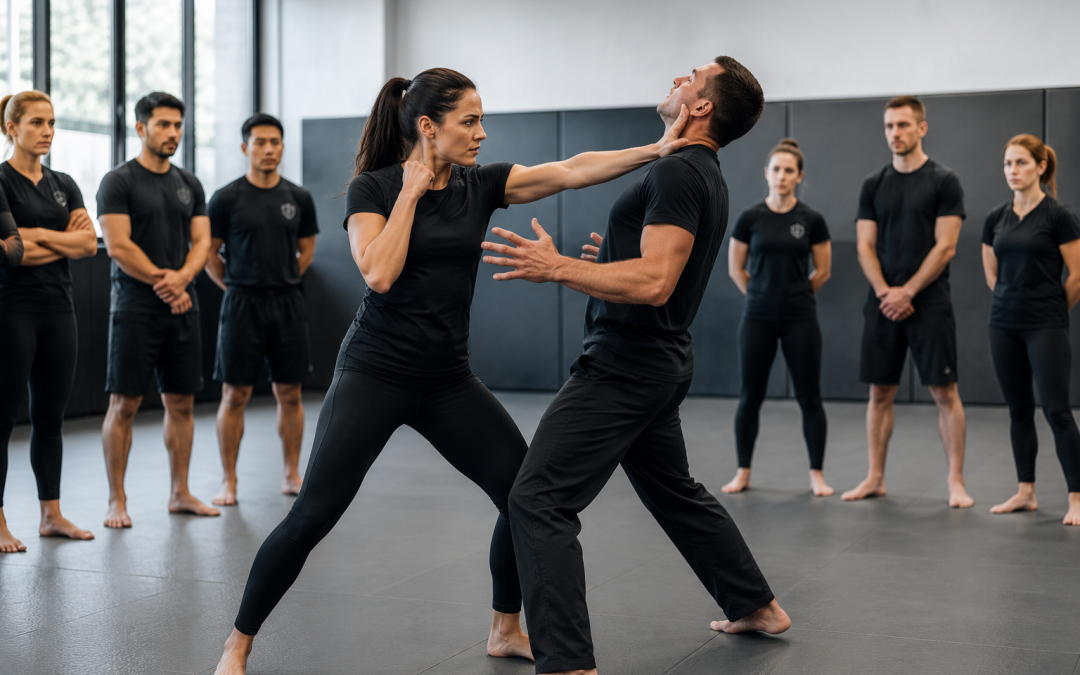
Effective self defense training Canada programs should cover awareness, communication, positioning, movement, and physical skills. The goal is to help students understand when to avoid conflict and when physical action may become necessary.
This approach is more realistic than treating every situation as a competition.
Myth 2: There Is One Perfect Self-Defense Technique
Another popular myth is that one secret move can stop any attacker.
Real-world situations rarely work that way.
People vary in size, strength, mobility, experience, and reaction speed. The environment also changes from one situation to another. A technique that works in one setting may not be suitable in another.
For this reason, good training focuses on principles rather than relying on one magic technique.
Students may learn how to maintain balance, create space, protect vulnerable areas, move away from danger, and respond under pressure. These principles can be adapted when circumstances change.
This is one reason structured self defense classes Canada can be valuable. Repeated practice helps students understand how different skills connect rather than memorising isolated movements.
Myth 3: Strength Is the Most Important Factor
Strength can be useful, but it is not the only factor in personal safety.
A smaller person may still benefit from good positioning, timing, awareness, balance, and technique. Likewise, someone who is physically strong can make poor decisions if they panic or fail to recognise danger.
Effective self-defence education should therefore focus on skills that can be developed through practice.
Technique, Timing and Awareness Matter
Training can help people become more familiar with movement and distance. It can also improve their ability to stay composed while making decisions.
This does not mean training eliminates fear. Instead, regular practice can make unfamiliar situations feel less overwhelming because the student has already worked through controlled scenarios.
That preparation can be useful for people of different ages and experience levels.
Myth 4: Self-Defense Training Makes People Aggressive
Some people avoid martial arts because they believe learning self-defence encourages aggressive behaviour.
The opposite can often be true when training is taught responsibly.
A well-structured martial arts environment can place strong emphasis on discipline, control, respect, and responsibility. Students learn that physical skills should not be used simply to prove strength or dominate others.
The purpose of self-defence is protection, not aggression.
For this reason, reputable self defense training Canada should teach students to assess situations carefully. Knowing how to respond does not mean looking for conflict. In many cases, the best outcome is to avoid it completely.
Myth 5: Women’s Self-Defense Classes Are Only About Physical Techniques
A more useful approach recognises the wider range of challenges that women may encounter.
Training can include awareness, boundary setting, verbal communication, movement, escape strategies, and physical skills. It can also help participants understand how distance and positioning affect their options.
The aim is not to create fear. Instead, the goal is to develop practical knowledge and confidence.
Confidence Should Come From Preparation
Confidence in self-defence should not mean believing that nothing bad can happen.
Healthy confidence comes from understanding what you can control. This includes paying attention to your surroundings, recognising uncomfortable behaviour, setting boundaries, and knowing when to seek help.
Physical training adds another layer of preparation.
When people practise movements repeatedly in a controlled environment, they can become more comfortable responding to pressure. This is more useful than simply watching demonstrations online.
Myth 6: Real Self-Defense Looks Like the Movies
Movies often portray self-defence as a sequence of impressive moves. The defender remains calm, performs several techniques, and quickly defeats the attacker.
Real situations are much less predictable.
There may be limited space, poor lighting, uneven ground, multiple people, or unexpected movement. Stress can also affect perception and coordination.
That is why realistic training should not depend on perfect conditions.
Students benefit from learning simple concepts that can be adjusted to different environments. They should also understand that escape and seeking assistance are often safer goals than trying to overpower someone.
Myth 7: You Need Years of Martial Arts Experience to Benefit
Another misconception is that self-defence only helps people who have trained for years.
Long-term practice can certainly develop greater skill. However, beginners can still learn valuable principles from the early stages of training.
Introductory classes can teach basic awareness, movement, positioning, and defensive concepts. As students continue, they can build greater familiarity and control.
The key is consistency.
Like many practical skills, self-defence becomes easier to understand when people practise regularly rather than relying on a single seminar or online video.
What Effective Self Defense Classes Canada Should Teach
When evaluating self defense classes Canada, look beyond impressive demonstrations. Consider what the programme actually teaches and how students are expected to apply those skills.
A well-rounded programme may include:
Situational awareness and risk recognition
Verbal communication and boundary setting
Safe positioning and movement
Basic defensive techniques
Escape and disengagement strategies
Stress management and controlled practice
Respect, discipline, and responsible use of skills
Training that can be adapted to different abilities
The learning environment matters too. Students should feel encouraged to ask questions and develop skills at a suitable pace.
A strong instructor should also explain the purpose behind each technique. Understanding why a movement works can help students make better decisions when circumstances change.
Why Regular Practice Matters
Knowing a technique in theory is different from being able to use it under pressure.
This is why repetition plays such an important role in self defense training Canada. Practice allows students to become familiar with movement while receiving feedback from instructors.
Over time, training can help develop better coordination and awareness.
Controlled drills can also introduce a level of pressure without creating unnecessary danger. This gives students an opportunity to practise decision-making rather than simply memorising movements.
However, training should always remain appropriate for the student’s age, ability, and experience.
The Role of Martial Arts in Personal Safety
Martial arts can provide a structured environment for developing physical and mental skills.
At Villari’s Martial Arts Centers, the principles of martial arts can support a broader understanding of discipline, awareness, confidence, and responsible training.
The value of martial arts extends beyond physical techniques. Regular practice can encourage focus, patience, coordination, and respect.
These qualities can contribute to a more balanced approach to personal safety.
A Practical Approach to Personal Safety
There is no guaranteed formula for avoiding every dangerous situation. However, people can take practical steps to improve their preparation.
Start by paying attention to your surroundings. Trust your instincts when something feels wrong. Maintain reasonable boundaries and avoid unnecessary confrontation.
If a situation becomes threatening, prioritise creating distance and getting to a safer location when possible. Seek help from others or contact emergency services when appropriate.
Training can complement these habits by giving you additional skills to draw upon.
The most useful mindset is not, “How can I win a fight?” It is, “How can I stay safe and get away?”
That shift is at the heart of responsible self-defence education.
Choosing the Right Self Defense Classes Canada
When comparing self defense classes Canada, look for programmes that take a balanced approach.
Consider the instructor’s experience, the training environment, the range of skills covered, and whether lessons are suitable for your current ability.
It is also worth asking whether the programme focuses on practical decision-making rather than unrealistic promises.
Be cautious of anyone claiming that a particular technique will work every time. Self-defence involves uncertainty, and responsible instructors should acknowledge that.
The best programmes help students understand both their abilities and their limitations.
Final Thoughts
Self-defence is not about becoming fearless or learning a perfect technique. It is about preparation, awareness, sound judgement, and practical skills.
Many common myths focus too heavily on fighting. In reality, effective personal safety often starts before physical contact ever occurs.
Whether someone chooses general self defense classes Canada, specialised women’s self defense classes, or broader self defense training Canada, the goal should remain the same: develop useful skills while promoting awareness, confidence, discipline, and responsible decision-making.
Understanding what self-defence can and cannot do is just as important as learning the techniques themselves. With realistic instruction and consistent practice, people can become better prepared to recognise risks, make informed choices, and respond more effectively when it matters. Contact us to learn more about self-defence training and how you can get started.
Frequently Asked Questions
1. What should I expect from self defense classes Canada?
Classes may cover awareness, movement, positioning, communication, defensive techniques, and escape strategies. The exact structure depends on the training programme and student level.
2. Are self defense classes suitable for beginners?
Yes. Beginners can learn fundamental concepts without having previous martial arts experience. Training typically progresses as students become more comfortable with the skills.
3. What is taught in women’s self defense classes?
Women’s self defense classes may cover awareness, boundary setting, verbal responses, positioning, physical defence, and escape strategies. The focus should be practical preparation rather than encouraging confrontation.
4. Does self-defense training make people aggressive?
Responsible training does not aim to encourage aggression. It can promote discipline, control, awareness, and responsible decision-making.
5. Is strength necessary for self-defense?
Strength can help, but it is not the only factor. Awareness, positioning, timing, balance, technique, and decision-making are also important elements of personal safety.
6. How often should I practise self-defense?
Regular practice is generally more useful than occasional training. Consistent lessons allow students to reinforce movement patterns and become more comfortable applying what they learn.
Choosing adult karate classes Canada can be a great way to improve fitness, learn practical skills, build confidence, and become part of a supportive community. However, cost is often an important factor when adults compare martial arts schools.
The challenge is that karate fees can vary from one school to another. A simple monthly figure does not always show what you receive for your membership. Class frequency, programme structure, instructor experience, grading, equipment, and membership terms can all affect the overall cost.
This guide explains the main factors that influence the cost of karate training across the Greater Toronto Area. It also shows what adults should look for when comparing karate classes for adults, so you can make a confident decision based on value rather than price alone.
What Affects the Cost of Adult Karate Classes Canada?
There is no single fee that applies to every karate school. Different training centres offer different programmes, schedules, facilities, and levels of support.
When comparing adult karate training Canada options, consider the complete programme rather than looking at membership fees alone.
Common factors include:
Number of classes available each week
Length of each training session
Instructor experience and qualifications
Class size and student-to-instructor attention
Belt grading and assessment structure
Training equipment provided
Uniform requirements
Membership terms
Beginner programmes
Advanced training opportunities
Additional workshops or events
For example, a school offering several weekly classes may provide greater flexibility than a centre with only one scheduled session. This can be especially valuable for working adults who need to fit training around busy routines.
Understanding Different Karate Membership Structures
Karate schools may use different membership models. Understanding these structures makes comparing options much easier.
Monthly Training Memberships
Some schools offer ongoing memberships that allow students to attend regular classes. These can work well for adults who want to make karate part of their weekly routine.
Before joining, check what the membership includes. Ask whether students can attend multiple classes and whether different skill levels are included.
Programme-Based Training
Other martial arts schools may structure training around specific programmes. These can provide a clear path for beginners and students who want to progress through the belt system.
Programme-based training can also help students understand what skills they will develop over time.
Flexible Training Options
Adults with changing schedules may benefit from flexible attendance options. This can be particularly useful for people balancing work, family commitments, travel, or other responsibilities.
A membership may look attractive at first glance, but its real value depends on how often you can realistically train.
Consider your schedule before choosing a programme.
If you can attend several sessions each week, a school with a broad timetable may offer better value. If your schedule is unpredictable, flexibility may matter more than the number of available classes.
Regular training also supports progress. Karate involves technique, timing, movement, balance, and repetition. Consistent practice helps these skills become more natural.
For this reason, choosing a programme you can maintain is often more important than choosing the cheapest option available.
What Should Be Included in Your Karate Training?
When comparing adult karate classes Canada, look beyond the basic class itself.
A well-structured programme may include several elements that contribute to the student’s experience.
These can include:
Structured lessons
Technique development
Fitness and conditioning
Partner drills
Self-defence skills
Belt progression
Instructor feedback
Goal setting
Community activities
Student support
The right combination depends on your goals.
Someone interested in fitness may place more importance on active sessions and conditioning. Another student may care more about traditional karate, self-defence, competition, or personal development.
A good school should explain what its programme offers before you commit.
How Instructor Experience Can Affect Value
The instructor plays a major role in the quality of martial arts education.
Experienced instructors can help students understand technique, correct mistakes, and progress at a suitable pace. They also need to create a training environment where beginners feel comfortable.
This is particularly important for adults who may have never trained in martial arts before.
At Villaris Martial Arts Centres, prospective students can consider more than the membership structure. The quality of instruction, learning environment, programme structure, and opportunities for progression all contribute to the overall experience.
When visiting a school, ask about instructor backgrounds and how new students are introduced to training.
Are Equipment and Uniforms Included?
Equipment can be another factor that affects the overall cost of karate training.
Some schools may require students to purchase a karate uniform. Depending on the programme, additional protective equipment may also be needed later.
Ask what you need before your first class.
You can ask:
Is a uniform required immediately?
Is training equipment provided?
Which equipment must students purchase themselves?
Are grading materials included?
Are there additional requirements for advanced training?
Getting clear answers helps you understand the complete commitment before joining.
Belt Grading and Progression Costs
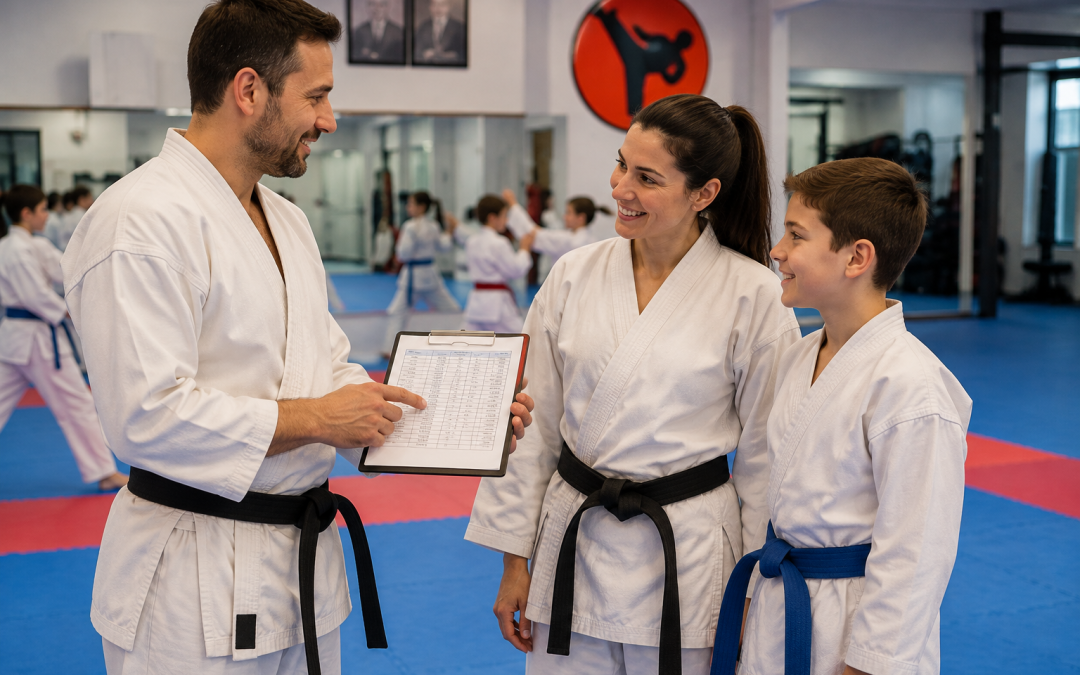
Belt grading is an important part of many karate programmes. It gives students clear goals and allows instructors to assess their progress.
However, grading policies can differ between schools.
Some programmes may include assessment within their standard membership structure. Others may charge separately for grading or related requirements.
This does not automatically make one programme better than another. The important point is transparency.
Before enrolling, ask how progression works and whether there are additional requirements at different stages.
A clear progression system can help adults stay motivated because they can see how their training is developing.
Compare Value, Not Just Cost
When comparing karate classes for adults, it can be tempting to choose the school with the lowest advertised fee.
However, cost alone does not tell you whether a programme is right for you.
Instead, compare the complete experience.
Factor
What to Consider
Class access
How many sessions fit your schedule?
Instruction
Are instructors experienced and supportive?
Programme
Does training match your goals?
Progression
Is there a clear belt system?
Flexibility
Can you make up missed sessions?
Equipment
What is included and what must you provide?
Community
Does the school create a positive environment?
Support
Will instructors help you improve?
This approach gives you a more realistic picture of value.
Is Karate Worth the Investment for Adults?
For many adults, karate offers benefits that extend beyond physical exercise.
Regular martial arts training can provide a structured activity that supports fitness, coordination, discipline, confidence, and goal setting.
There is also a social side to training. Joining a martial arts school can introduce you to people who share similar interests and goals.
For adults who spend much of the day sitting at work, regular movement can also provide a useful change from a desk-based routine.
The value is therefore not limited to the time spent inside the dojo. It can also come from the skills, habits, relationships, and confidence developed through consistent practice.
Questions to Ask Before Joining a Karate School
Before choosing adult karate training Canada, arrange a conversation with the school or attend an introductory session when available.
Ask questions such as:
What does the adult programme include?
How often can I train?
Are beginner classes available?
How does belt progression work?
Are grading fees separate?
What equipment will I need?
What happens if I miss a class?
Are there advanced training opportunities?
What are the membership terms?
Can I try a class before committing?
The answers can help you compare schools fairly.
They also give you an idea of how transparent and welcoming the training centre is.
Why Transparency Matters at Villaris Martial Arts Centres
Choosing a martial arts school is a personal decision. Adults should feel comfortable asking questions about training, commitments, progression, and membership.
Villaris Martial Arts Centres focuses on creating a structured environment where students can develop their skills over time. For prospective students, understanding the programme before joining can make the decision much easier.
Rather than choosing based only on a headline cost, look at what the programme provides and whether it supports your personal goals.
A transparent conversation with the school can help you understand what to expect from your training journey.
Final Thoughts
The cost of adult karate classes Canada can vary because every school has its own programme, timetable, instructors, facilities, and membership structure. That is why comparing a single fee is not enough when deciding where to train.
Instead, consider the full value of the programme. Look at class access, instructor support, progression, flexibility, equipment, and the overall training environment.
For adults comparing karate classes for adults, the best choice is usually the programme that fits both your goals and your lifestyle.
A good martial arts school should make its structure clear and give you the information needed to make an informed decision. Taking time to ask questions before joining can help you find a programme that you can enjoy and maintain for the long term.
FAQs About Adult Karate Classes Canada
1. How much do adult karate classes cost in Canada?
The cost varies between schools and programmes. Instead of relying on a single figure, compare what each membership includes, such as class access, instructor support, grading, equipment, and programme benefits.
2. Are karate classes suitable for adults who are complete beginners?
Yes. Many karate programmes welcome adults with no previous martial arts experience. Beginners can learn basic movements and techniques before progressing to more advanced training.
3. How often should adults train in karate?
Consistency is more important than trying to train as often as possible. Choose a schedule that fits your lifestyle and allows you to attend regularly.
4. What should I look for when comparing karate classes for adults?
Consider instructor experience, class schedules, programme structure, progression, flexibility, training environment, equipment requirements, and membership terms.
5. Is equipment included with adult karate training Canada programmes?
This depends on the school. Some equipment may be provided, while students may need to purchase items such as uniforms or protective gear. Always ask about requirements before joining.
6. How does belt progression work in karate?
Students generally progress through a series of belt levels by developing techniques and demonstrating the required skills. The exact grading structure varies between martial arts schools.
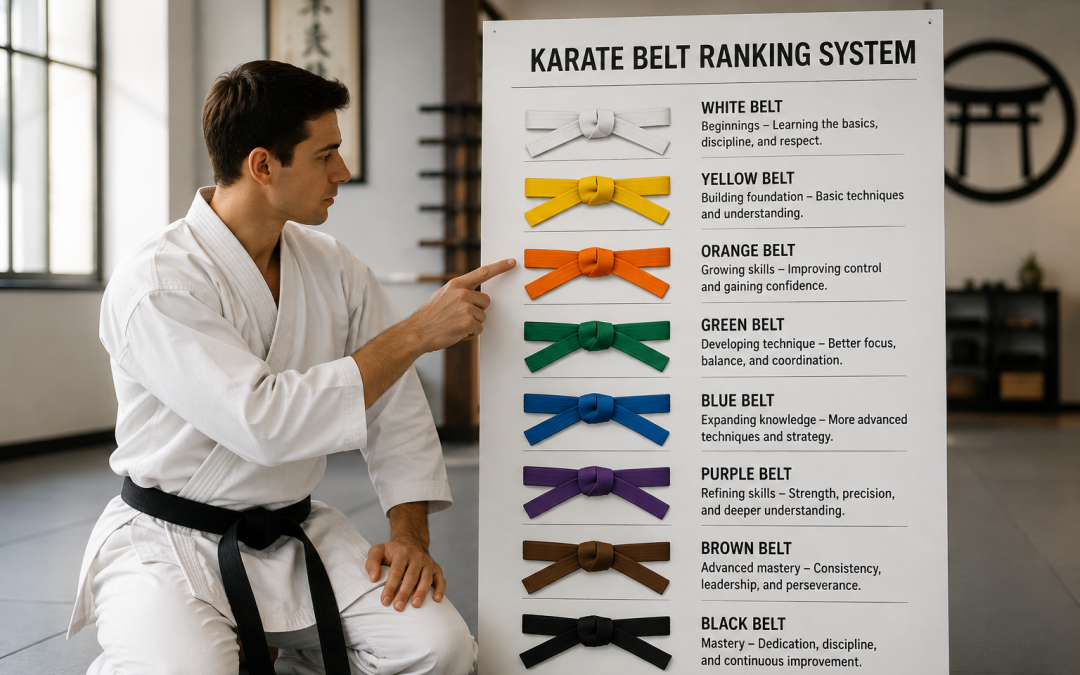
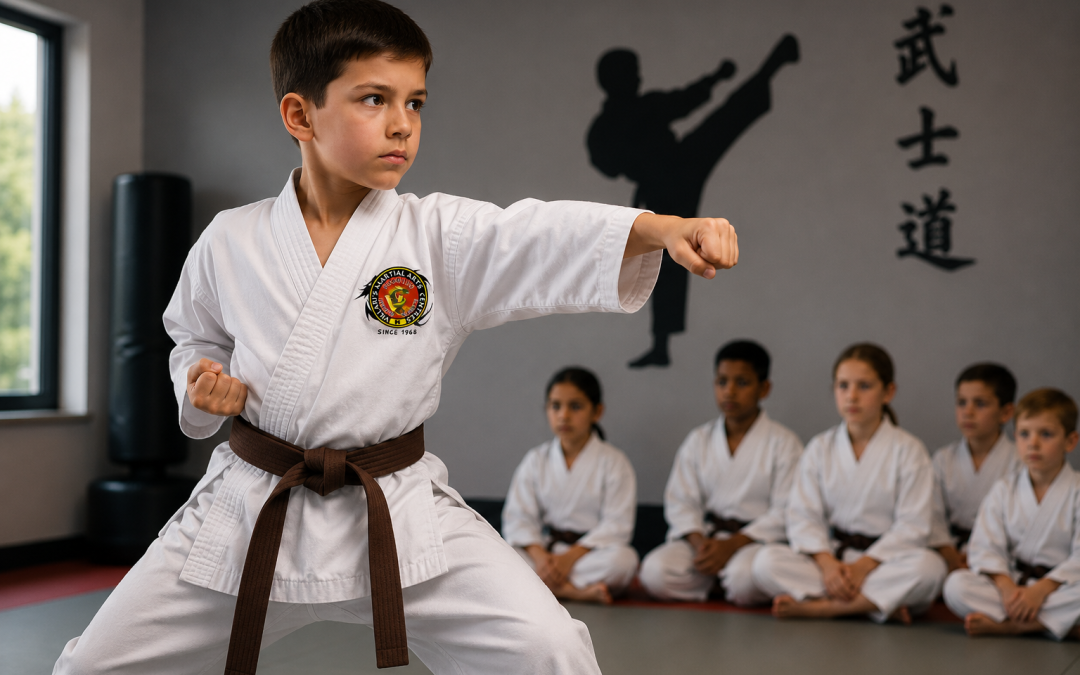
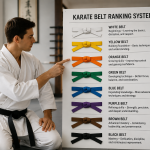
For students and parents considering martial arts training programs, the belt system can be one of the most interesting parts of the journey. A belt is not simply a colour worn around the waist. It represents progress, effort, skill development, discipline, and the ability to apply what a student has learned.
At Villaris Martial Arts Centres, students follow a structured learning path designed to develop technical skills, confidence, fitness, self-defence abilities, and character. The progression gives students clear goals while allowing instructors to assess development at each stage.
However, it is important to understand that belt colours and grading requirements can vary between martial arts schools and styles. The meaning behind progression is often more important than the colour itself.
Why Do Martial Arts Training Programs Use Belts?
A belt system gives students a clear way to measure their progress. Martial arts can involve many techniques, from basic stances and strikes to more advanced combinations and self-defence movements. Without a structured system, it can be difficult for students to see how far they have come.
A belt can provide a visible reminder of that progress.
For younger students, this can also make training more engaging. Reaching the next level creates a realistic goal to work towards. Adults can benefit in the same way, especially when they are starting martial arts for the first time.
A good ranking system also encourages students to focus on learning rather than rushing ahead. Each level should build on skills learned previously.
What Does a White Belt Mean?
The white belt traditionally represents the beginning of a student’s martial arts journey. It is the stage where students become familiar with the basic principles of training.
A new student may learn:
Basic stances and movement
Fundamental strikes and kicks
Simple blocks
Balance and coordination
Class etiquette
Basic self-defence concepts
How to listen and respond to instruction
At this stage, the goal is not perfection. Beginners are learning how to move correctly and understand the expectations of martial arts training.
For parents, this stage is also useful because it allows children to build confidence gradually. They do not need previous experience to get started. Villaris states that beginners are welcome and that fundamental techniques are taught step by step.
What Do Intermediate Belts Represent?
As students progress, the focus shifts from simply learning individual movements to combining techniques and applying them with better control.
Intermediate belts generally represent a growing level of:
Technical knowledge
Physical control
Coordination
Focus
Confidence
Discipline
Self-defence awareness
Students are expected to remember more techniques and perform them with greater accuracy.
This stage can also teach an important lesson: progress does not always happen at the same speed. Some techniques may feel easy, while others require repeated practice.
That experience can help students understand the value of patience and consistent effort.
How Martial Arts Training Programs Build Progress
Effective martial arts training programs do not treat belt advancement as simply learning a list of movements. Progress should involve several areas of development.
Technical Development
Students need to demonstrate that they understand the techniques required at their current level. This includes proper movement, balance, timing, and control.
Physical Development
Martial arts training can improve fitness, flexibility, coordination, strength, and endurance. Villaris’ programs are designed for different age groups and experience levels, with fitness and physical conditioning forming part of the training experience.
Mental Development
Students also learn to focus during lessons. They must listen, remember instructions, correct mistakes, and stay engaged.
Character Development
Perhaps the most important part of progression is character. Students are encouraged to develop qualities such as discipline, responsibility, perseverance, honesty, and respect.
This is why a belt should never be viewed as a reward for attendance alone.
What Does a Brown Belt Represent?
In many karate systems, brown belts are associated with advanced student development. By this point, students have usually spent considerable time building their foundations.
The emphasis often shifts towards refinement.
A student may be expected to demonstrate:
Stronger technical control
Better timing and accuracy
Improved physical conditioning
Greater awareness during partner work
More consistent discipline
A deeper understanding of self-defence principles
At this level, students may also begin to understand that knowing a technique and performing it effectively are two different things.
Repeated practice helps turn knowledge into skill.
What Does a Black Belt Actually Mean?
A black belt is often seen as the final destination of martial arts. In reality, it is better understood as an important milestone.
Earning a black belt does not mean that a student knows everything. Instead, it demonstrates a strong foundation, commitment, technical development, and the ability to continue learning at a more advanced level.
For many students, reaching this stage requires years of regular training.
A black belt can represent:
Long-term commitment
Consistent practice
Self-discipline
Technical proficiency
Mental resilience
Personal growth
Respect for the martial arts
The most valuable achievement may not be the belt itself. It is the person the student becomes while working towards it.
Is Every Karate Belt the Same?
No. This is an important point for parents and prospective students.
Different martial arts schools may use different belt colours, ranking structures, grading intervals, and requirements. Even schools teaching related styles may organise their progression differently.
Therefore, students should not assume that a particular colour always represents exactly the same level everywhere.
The martial arts training programs at Villaris follow a structured progression. The school’s curriculum is designed to introduce techniques step by step while providing measurable achievements and advancement.
This approach helps instructors assess students based on their actual development rather than simply the amount of time they have attended.
What Happens During a Belt Assessment?
A belt assessment is an opportunity for an instructor to evaluate whether a student is ready for the next stage.
Depending on the student’s level, assessment may consider:
Technique: Can the student perform the required movements correctly?
Control: Can techniques be performed safely and with appropriate control?
Knowledge: Does the student understand the techniques being taught?
Fitness: Can the student complete the physical requirements of their level?
Focus: Can the student remain attentive throughout training?
Attitude: Does the student show respect, discipline, and a willingness to learn?
This broader approach helps make belt progression meaningful.
Why Belt Progression Matters for Children
For children, martial arts progression can provide lessons that extend beyond the dojo.
A child may initially struggle with a technique. With regular practice, they eventually improve. That experience can teach them that mistakes are part of learning.
They also learn that improvement requires effort.
The benefits can include:
Greater confidence
Improved concentration
Better coordination
Increased discipline
Greater respect for others
Stronger perseverance
More confidence when facing challenges
Villaris’ children’s programs focus on skills such as discipline, confidence, respect, coordination, fitness, and self-defence in an encouraging environment.
Martial Arts Classes Canada: What Should Parents Look For?
A strong program should provide clear instruction and a safe environment. Parents should also consider the experience of instructors, class structure, age-appropriate teaching, and how student progress is measured.
Ask questions such as:
Is the curriculum clearly structured?
Are beginners supported?
Are children taught according to their age and ability?
Does the program focus on character as well as technique?
Are instructors properly trained?
Can parents understand how progression works?
Villaris offers programs for children, teens, adults, and families, with instruction adapted to age, experience, fitness, and individual goals.
How Shaolin Kempo Karate Canada Fits Into Belt Progression
Students interested in Shaolin Kempo Karate Canada may also want to understand how the style approaches martial arts development.
Shaolin Kempo Karate combines elements associated with Shaolin Kung Fu, Kempo, traditional Karate, Western boxing, Jujutsu, Chin Na, and grappling arts.
This creates a broad training system that includes striking, kicking, movement, self-defence, and grappling concepts.
At Villaris, this training is supported by a structured curriculum that develops students progressively. The goal is to help students build practical skills while also developing mental focus and personal discipline.
Belt Colour Is Only One Part of the Journey
It is easy to focus on the colour around a student’s waist. However, the real value of martial arts progression lies in what happens between each grading.
A student who earns a new belt has hopefully gained more than another colour. They have spent time learning, practising, making mistakes, improving, and becoming more confident.
For parents, this is one reason to look closely at the teaching philosophy behind different martial arts training programs.
The right program should make progression understandable while keeping the focus on genuine development.
Final Thoughts
The karate belt ranking system provides students with a clear path through their martial arts journey. From the first lessons as a beginner to the discipline required for advanced training, every stage offers an opportunity to learn and improve.
While belt colours can differ between schools, the core idea remains valuable: progress should reflect consistent effort, growing skill, personal discipline, and a willingness to keep learning.
At Villaris Martial Arts Centres, structured progression is combined with fitness, self-defence, confidence, and character development. The school offers children’s, adult, and family programs for students at different experience levels.
For anyone considering martial arts training programs, understanding the ranking system is a useful first step. More importantly, prospective students and parents should choose a school where instructors explain the journey clearly and support students throughout every stage.
FAQs
1. How long does it take to earn a black belt?
There is no single timeframe that applies to every student. Progress depends on factors such as attendance, practice, skill development, fitness, and the school’s grading structure.
2. Do beginners need martial arts experience?
No. Beginners can start without previous martial arts experience. Villaris specifically welcomes beginners and teaches fundamental techniques step by step.
3. Are belt colours the same in every karate school?
No. Belt colours, grading systems, and requirements can vary between martial arts styles and schools. It is best to ask the individual school about its ranking structure.
4. Is karate suitable for children?
Yes. Age-appropriate karate programs can help children develop coordination, fitness, confidence, discipline, focus, and self-defence skills. Villaris offers children’s martial arts programs designed around these areas.
5. Can adults start martial arts training as beginners?
Yes. Adults do not need previous experience to begin. Villaris offers adult programs for different fitness and experience levels, with an emphasis on self-improvement, conditioning, confidence, and self-defence.
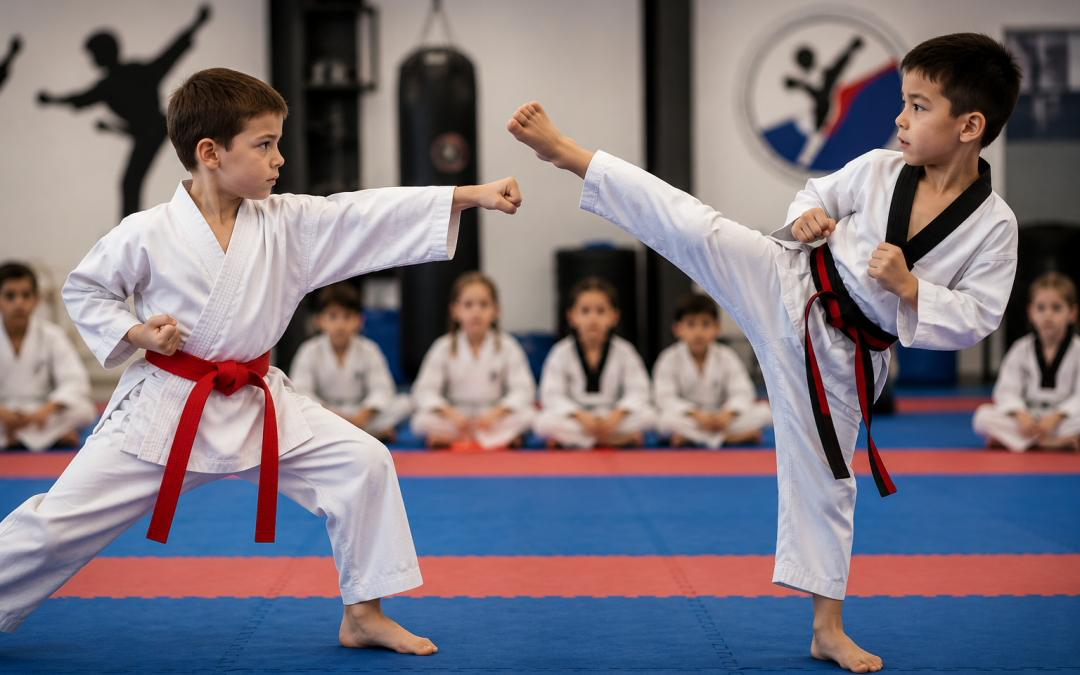
Choosing the right martial art for your child is an important decision. Many parents compare kids karate classes with Taekwondo because both disciplines offer valuable physical and mental benefits. However, each has its own teaching style, training methods, and areas of focus. Understanding these differences can help you select a program that matches your child’s personality, interests, and long-term goals.
Whether your child is looking to build confidence, improve coordination, develop self-discipline, or simply enjoy an active hobby, both martial arts can provide positive experiences. This guide explains the similarities and differences while helping parents make an informed decision. At Villaris Canada, traditional karate is taught with a strong emphasis on character development, respect, and lifelong learning.
Why Parents Choose Martial Arts
Martial arts offer much more than physical activity. Children develop valuable life skills while participating in structured classes.
Many parents enrol their children to help improve:
Confidence
Discipline
Respect
Focus
Coordination
Fitness
Social skills
Self-control
These qualities often benefit children at school, at home, and in everyday life.
Understanding Kids Karate Classes
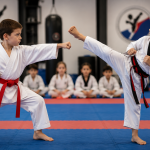
Traditional kids karate classes focus on balanced physical and mental development. Students learn practical techniques while building discipline through structured training.
Karate training typically includes:
Punching techniques
Kicking techniques
Blocking skills
Balance exercises
Kata (forms)
Partner drills
Self-defence basics
Respect and etiquette
Progress is measured through regular practice and gradual skill development.
What Is Taekwondo?
Taekwondo originated in Korea and is recognised for its fast-paced kicking techniques and dynamic movements.
Typical Taekwondo classes include:
High kicks
Jump kicks
Fast footwork
Sparring practice
Forms (Poomsae)
Flexibility training
Balance drills
Competition preparation
Many schools also place significant emphasis on athletic performance and sport competition.
Similarities Between Karate and Taekwondo
Although they have different styles, both martial arts share several important values.
Children learn:
Respect for instructors
Self-discipline
Confidence
Goal setting
Physical fitness
Coordination
Concentration
Perseverance
Both disciplines encourage positive personal growth through consistent practice.
Key Differences Between Karate and Taekwondo
Understanding their differences helps parents choose the best fit.
Karate
Taekwondo
Balanced hand and foot techniques
Strong emphasis on kicking
Traditional self-defence focus
Sport-oriented training in many schools
Practical movement
Dynamic athletic movement
Strong emphasis on discipline
Strong emphasis on speed and agility
Structured progression
Competition often encouraged
Neither discipline is better than the other. The right choice depends on your child’s interests and learning style.
Karate Classes for Kids Focus on Practical Skills
Many karate classes for kids teach practical techniques that are suitable for everyday self-defence while encouraging controlled movements and good decision-making.
Children practise:
Controlled punches
Defensive blocks
Stable stances
Basic kicks
Safe movement
Respectful partner work
Body awareness
Problem-solving
These exercises help children develop confidence while learning responsibility.
Karate Lessons for Children Build Strong Foundations
Quality karate lessons for children emphasise gradual improvement rather than immediate results.
Students develop:
Patience
Confidence
Concentration
Responsibility
Consistency
Respect
Healthy habits
Positive attitudes
Each class builds upon previously learned skills, allowing steady long-term progress.
Which Martial Art Is Better for Confidence?
Both karate and Taekwondo help children become more confident.
Traditional karate often develops confidence through:
Skill mastery
Belt progression
Respectful learning
Positive encouragement
Consistent practice
Personal achievement
Goal setting
Self-improvement
Confidence grows naturally as children overcome new challenges.
Discipline and Respect in Traditional Karate
One reason many families choose karate is its strong emphasis on discipline and respect.
Children learn to:
Listen carefully.
Follow instructions.
Respect classmates.
Show courtesy.
Accept feedback.
Practice patience.
Demonstrate responsibility.
Work toward long-term goals.
These habits often transfer into school and home life.
Physical Benefits for Children
Both martial arts improve overall fitness.
Common benefits include:
Better coordination.
Improved balance.
Increased flexibility.
Greater endurance.
Stronger muscles.
Faster reactions.
Better posture.
Healthy activity levels.
Regular training supports physical development while making exercise enjoyable.
Mental Benefits Beyond the Dojo
Martial arts also contribute to emotional and mental development.
Children may improve:
Concentration.
Self-control.
Emotional resilience.
Problem-solving.
Listening skills.
Goal achievement.
Stress management.
Positive thinking.
These qualities benefit children in many areas of everyday life.
How to Choose the Right Martial Art
Every child has different interests and learning styles.
Consider:
Personality.
Confidence level.
Physical interests.
Long-term goals.
Learning style.
Instructor experience.
Class environment.
Training philosophy.
Visiting classes and observing instructors can help parents make informed decisions.
Why Instructor Experience Matters
An experienced instructor can greatly influence a child’s learning experience.
Look for schools that provide:
Qualified instructors.
Safe training.
Positive encouragement.
Structured lessons.
Individual attention.
Respectful teaching.
Age-appropriate instruction.
Consistent progression.
Quality instruction is often more important than the specific martial art itself.
Why Many Families Choose Villaris Canada
At Villaris Canada, traditional karate focuses on helping children become confident, respectful, and disciplined individuals.
Training encourages:
Personal growth.
Strong character.
Positive habits.
Respect.
Consistency.
Self-confidence.
Physical fitness.
Lifelong learning.
Rather than focusing only on competition, students are encouraged to develop skills that benefit them throughout life.
Helping Your Child Get Started with Karate
Starting martial arts is an exciting step for many children. Parents can make the transition easier by encouraging their child to approach training with a positive attitude and realistic expectations. Every student learns at a different pace, and steady improvement is far more important than immediate perfection.
Before enrolling, consider attending an introductory class to observe the teaching style and training environment. Look for instructors who encourage respect, patience, and personal growth while creating a supportive atmosphere for every student. When children feel comfortable and motivated, they are more likely to enjoy training and continue developing valuable life skills through karate.
Conclusion
Choosing between kids karate classes and Taekwondo ultimately depends on your child’s personality, interests, and goals. Both disciplines offer excellent opportunities to build confidence, fitness, coordination, and discipline. However, traditional karate places a strong emphasis on balanced self-defence skills, respect, structured learning, and long-term character development.
For parents seeking karate classes for kids that prioritise confidence, discipline, and lifelong personal growth, Villaris Canada offers a welcoming environment where children can develop valuable skills both inside and outside the dojo. With experienced instructors and thoughtfully designed karate lessons for children, families can feel confident that their child is learning in a supportive and respectful setting.
Frequently Asked Questions
1. Is karate or Taekwondo better for young children?
Both are excellent choices. The best option depends on your child’s personality, interests, and preferred learning style.
2. What age can children start karate classes?
Many karate schools welcome children from around four to six years old, depending on the program and the child’s readiness.
3. Do karate classes improve confidence?
Yes. Regular practice, structured progression, and achieving new goals help children develop genuine confidence over time.
4. What should parents look for when choosing a martial arts school?
Look for experienced instructors, a safe environment, age-appropriate classes, structured teaching, and a strong emphasis on respect and character development.
5. Why choose traditional karate at Villaris Canada?
Villaris Canada focuses on traditional karate principles, helping children build confidence, discipline, focus, and respect through structured, supportive, and engaging training.
Confidence, discipline, and focus are often mentioned as benefits of martial arts, but these qualities are not developed overnight or through motivational slogans. They are earned through consistent practice, respectful instruction, and a structured learning environment. This is why many families and individuals choose martial arts classes Canada to develop valuable life skills alongside physical fitness.
Traditional karate is more than learning punches, kicks, and self-defence techniques. It teaches students how to overcome challenges, respect others, and build resilience through steady progress. Whether children are learning patience or adults are looking for personal growth, a reputable karate academy Canada provides an environment where these qualities develop naturally.
At Villaris Canada, traditional karate training focuses on long-term character development rather than quick results, helping students build confidence that extends beyond the dojo.
Why Traditional Karate Is Different
Unlike many fitness activities, traditional karate combines physical training with mental discipline and personal responsibility.
Students learn to:
Set achievable goals.
Respect instructors and classmates.
Practice patience.
Develop self-control.
Improve concentration.
Build resilience.
Accept constructive feedback.
Celebrate steady progress.
These principles remain valuable throughout school, work, and everyday life.
Martial Arts Classes Canada Encourage Long-Term Growth
Many people begin martial arts classes Canada for fitness or self-defence, but they often continue because of the personal development they experience.
Rather than competing against others, students focus on improving themselves.
Benefits include:
Greater confidence.
Better coordination.
Improved fitness.
Mental resilience.
Stronger discipline.
Better posture.
Increased flexibility.
Healthier habits.
Progress is measured through dedication rather than natural athletic ability.
Confidence Is Built Through Achievement
True confidence comes from accomplishing difficult goals through consistent effort.
Traditional karate encourages students to:
Learn new techniques.
Practice regularly.
Improve gradually.
Earn belt promotions.
Accept challenges.
Learn from mistakes.
Support classmates.
Develop perseverance.
Each achievement reinforces belief in one’s own abilities.
Discipline Develops Through Routine
Discipline is one of karate’s strongest foundations.
Every class follows a structured format that encourages responsibility and consistency.
Students develop discipline by:
Arriving prepared.
Following instructions.
Practising respectfully.
Maintaining focus.
Setting personal goals.
Respecting dojo etiquette.
Training consistently.
Taking responsibility for improvement.
These habits often transfer into school, careers, and daily life.
Focus Improves With Consistent Practice
Modern life is full of distractions.
Traditional karate teaches students to remain fully present during training.
Exercises improve:
Attention span.
Listening skills.
Body awareness.
Decision making.
Memory.
Balance.
Reaction time.
Mental clarity.
Improved focus benefits both children and adults in many aspects of life.
The Importance of Experienced Instructors
Instructor experience plays a significant role in student success.
A quality karate academy Canada emphasises:
Safe instruction.
Technical accuracy.
Positive encouragement.
Respectful teaching.
Individual guidance.
Progressive learning.
Student safety.
Character development.
Experienced instructors understand that every student learns at a different pace.
Kids and Adults Martial Arts Programs Support Every Stage of Learning
One of the greatest strengths of traditional karate is its accessibility.
Quality kids and adults martial arts programs are designed to meet the needs of different age groups while maintaining consistent training principles.
Children Often Develop
Better listening.
Improved confidence.
Respect for others.
Self-control.
Physical coordination.
Healthy routines.
Social skills.
Positive behaviour.
Adults Often Experience
Stress reduction.
Increased fitness.
Greater confidence.
Mental focus.
Improved flexibility.
Better discipline.
Goal achievement.
Lifelong learning.
Everyone progresses according to their own ability and commitment.
Respect Remains Central to Traditional Karate
Respect is practised in every class rather than simply discussed.
Students learn to respect:
Their instructors.
Training partners.
The dojo.
The learning process.
Different skill levels.
Personal improvement.
Rules and structure.
Themselves.
Respect creates a positive learning environment where everyone can improve safely.
Real Progress Takes Time
Unlike unrealistic marketing promises, traditional karate recognises that meaningful growth happens gradually.
Typical progress includes:
Training Stage
Skills Developed
Beginner
Confidence, basic movement
Early Training
Coordination, discipline
Intermediate
Technique, focus
Advanced
Leadership, resilience
Long-Term Practice
Character, lifelong learning
Consistent attendance is far more important than natural ability.
Physical Benefits Support Mental Growth
Although karate develops character, physical health also improves over time.
Students often experience:
Better balance.
Improved coordination.
Increased strength.
Greater flexibility.
Cardiovascular fitness.
Healthy posture.
Better endurance.
Enhanced mobility.
Physical improvements often reinforce confidence and motivation.
A Positive Training Environment Matters
The best learning happens in supportive environments.
A professional dojo encourages:
Mutual respect.
Safe practice.
Positive encouragement.
Individual progress.
Teamwork.
Personal responsibility.
Goal setting.
Lifelong learning.
Students are encouraged to challenge themselves without unnecessary pressure.
These qualities often lead to a rewarding long-term experience.
Why Families Choose Traditional Martial Arts
Parents often choose traditional karate because it develops qualities that extend beyond physical activity.
Families value:
Consistency.
Respect.
Confidence.
Discipline.
Healthy habits.
Goal setting.
Social development.
Positive role models.
These benefits support children’s development both inside and outside the dojo.
The Villaris Canada Approach
At Villaris Canada, traditional karate emphasises personal growth alongside technical development.
Students are encouraged to:
Train consistently.
Respect others.
Build confidence gradually.
Improve focus.
Develop discipline.
Learn at their own pace.
Support fellow students.
Enjoy lifelong learning.
The objective is not simply earning belts but developing skills that remain valuable throughout life.
Conclusion
Choosing martial arts classes Canada is about far more than learning self-defence techniques. Traditional karate provides a structured path for developing confidence, discipline, focus, and resilience through consistent practice and experienced instruction. Whether attending a respected karate academy Canada or participating in kids and adults martial arts programs, students benefit from lessons that support both personal and physical growth.
Rather than relying on marketing claims, traditional karate demonstrates its value through steady progress, respectful teaching, and lifelong learning. At Villaris Canada, students of all ages are encouraged to build lasting confidence and strong character while enjoying the rewarding journey of martial arts.
Frequently Asked Questions
1. How do martial arts classes help build confidence?
Confidence develops through consistent practice, learning new skills, overcoming challenges, and achieving personal goals over time.
2. Are martial arts suitable for both children and adults?
Yes. Quality kids and adults martial arts programs are designed to suit different ages, experience levels, and fitness abilities.
3. What should I look for in a karate academy?
Choose a school with experienced instructors, a structured curriculum, a safe environment, and a strong focus on respect and personal development.
4. Does traditional karate improve focus?
Yes. Regular training encourages concentration, discipline, listening skills, and mental awareness, which can benefit daily life.
5. Why is traditional karate different from other fitness activities?
Traditional karate combines physical training with character development, teaching confidence, discipline, respect, perseverance, and lifelong learning alongside practical martial arts skills.