
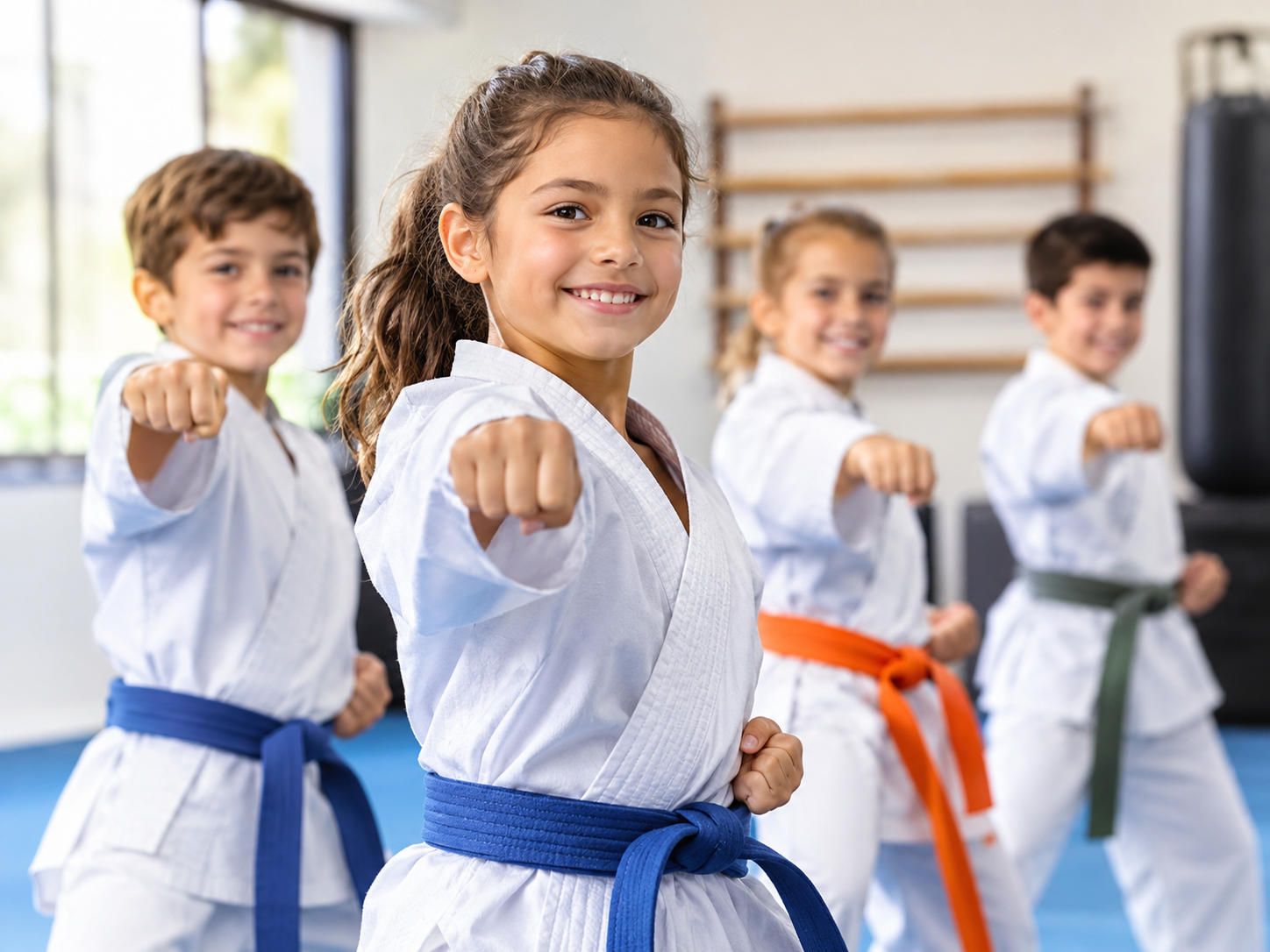
Every parent wants their child to grow into someone who feels confident, makes thoughtful decisions and handles challenges with a positive attitude. However, these qualities do not develop overnight. Children need opportunities to practise new skills, learn from mistakes and build trust in their own abilities. This is one reason why martial arts for kids can be a valuable activity for families looking beyond traditional sports.
Martial arts training involves much more than learning punches, kicks and defensive movements. It introduces children to structure, goal-setting, respect and the importance of consistent effort. Through regular classes, children can develop physical skills while learning habits that support their everyday lives.
At Villari’s Martial Arts Centres, martial arts training provides children with an opportunity to learn in a structured environment where progress comes through practice, patience and participation.
1. Building Confidence Through Small Achievements
Confidence grows when children begin to recognise what they can accomplish through their own efforts. Martial arts provides many opportunities for this kind of progress.
During training, children learn different movements, practise combinations and work towards mastering new techniques. Some skills may take several attempts before they feel comfortable. When a child finally performs a movement correctly, that achievement can create a sense of pride.
These small successes can make a meaningful difference over time.
For example, a child who initially feels nervous about joining a class may gradually become more comfortable participating in group activities. Another child might feel unsure about attempting a new technique but become more willing to try after receiving encouragement from an instructor.
One of the important kids martial arts benefits is that children learn to measure progress through personal effort rather than constantly comparing themselves with others.
2. Improving Focus and Listening Skills
Children encounter many situations where they need to listen carefully and follow instructions. Martial arts classes provide regular opportunities to practise these skills. Students must pay attention to their instructors, remember movement sequences and respond to directions. They also learn to wait for their turn and remain aware of what is happening around them.
For younger children, these activities can help create a routine that encourages attentive participation.
For instance, an instructor may demonstrate a particular stance before asking students to repeat it. Children need to observe the demonstration, understand the instructions and apply what they have learned. Over time, regular practice may help children become more comfortable following multi-step instructions and staying engaged in structured activities.
These lessons are not a replacement for classroom learning, but they can give children another setting in which to practise attention and listening.
3. Teaching Discipline Through Consistent Practice
Discipline is not simply about following rules. It also involves understanding responsibilities, developing routines and continuing with something even when it becomes challenging.
This is an important part of martial arts for children.
Students are expected to arrive ready for class, follow instructions, respect training rules and practise techniques. They also learn that improvement requires regular effort rather than instant results.
For example, a child working towards a new belt must practise the required movements and demonstrate an understanding of the skills involved. This process teaches that achievements come through preparation and commitment. The experience can help children understand the value of patience. Instead of expecting immediate success, they begin to recognise that steady practice plays an important role in learning.
Parents may notice these habits gradually appearing in other areas, such as completing homework, keeping track of belongings or following household routines. However, every child develops at a different pace.
4. Encouraging Respect and Positive Behaviour
Respect is a central part of many traditional martial arts programmes. Children learn that how they treat instructors, classmates and training partners matters just as much as their physical performance.
In class, students may practise greeting instructors, listening without interrupting and waiting until others have finished speaking. They also learn to share training space and cooperate with classmates. These simple routines reinforce the importance of treating others fairly.
Another important lesson is understanding that martial arts skills should be used responsibly. Children need to recognise the difference between practising techniques in a supervised class and using physical skills outside the training environment. Good martial arts instruction places importance on self-control, safety and respect rather than encouraging aggression.
For parents considering children and martial arts, this focus on responsible behaviour is an important factor when choosing a suitable programme.
5. Developing Coordination and Physical Fitness
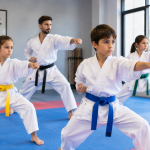
Along with personal development, martial arts training provides children with opportunities to move, exercise and improve physical skills. Classes often involve activities that require balance, coordination, flexibility and controlled movement.
Children may practise:
- Different stances and footwork.
- Controlled punches and kicks.
- Balance and body positioning.
- Movement combinations.
- Partner exercises under supervision.
- Warm-up and fitness activities.
These activities encourage children to become more aware of how their bodies move.
Regular participation can also contribute to general physical activity, which is important for growing children. The level of physical challenge should suit each child’s age, ability and experience.
Among the many kids karate benefits, developing movement skills in a structured and supportive setting can be particularly valuable.
6. Helping Children Handle Challenges and Setbacks
Not every training session will feel easy. Some techniques take time to learn, and children may occasionally struggle with movements that seemed simple at first.
These moments can become useful learning experiences.
Rather than treating mistakes as failures, instructors can encourage children to identify what needs improvement and try again. This helps create an environment where effort and learning are valued.
For example, a student preparing for a belt assessment may need additional practice before feeling ready. With guidance and regular participation, the child can learn to approach the challenge one step at a time.
This does not mean martial arts will remove frustration or make every child resilient immediately. Instead, it gives children a practical setting in which they can practise responding to challenges with patience and persistence.
7. Creating Opportunities for Social Interaction
Group activities allow children to meet others, develop friendships and learn how to participate in a shared environment.
Martial arts classes bring together students who may have different ages, personalities and experience levels. Through group exercises and supervised partner activities, children learn to communicate and cooperate. For a child who finds new social settings difficult, attending regular classes may provide a familiar routine and repeated opportunities to interact with others.
In addition, working alongside classmates can help children understand that everyone learns at a different pace. The social experience is one of the reasons parents explore martial arts for kids as an alternative to activities that focus mainly on individual performance.
What Should Parents Look for in a Kids’ Martial Arts Programme?
Choosing the right programme is just as important as choosing the activity itself. A good learning environment should support children’s physical safety, confidence and individual development.
Before enrolling your child, consider the following factors:
Qualified and supportive instructors: Look for instructors who can explain techniques clearly, manage different age groups and provide positive guidance.
Age-appropriate classes: Training activities should match children’s physical abilities, attention spans and experience levels.
Clear safety practices: Classes should include suitable warm-ups, supervised practice and clear rules for partner activities.
A positive learning environment: Children should feel comfortable asking questions, making mistakes and learning at their own pace.
Realistic progress expectations: Belt advancement and skill development should reflect demonstrated ability rather than pressure to progress quickly.
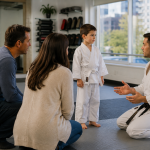
Parents may also find it helpful to observe a class or ask whether their child can attend an introductory session before making a decision.
At Villari’s Martial Arts Centres, parents can explore the available [kids karate classes] to understand how structured martial arts training may fit their child’s interests and learning needs.
How Often Should Children Attend Martial Arts Classes?
The right training schedule depends on a child’s age, energy levels, school commitments and individual goals.
For beginners, starting with one or two classes per week can provide a manageable introduction. This gives children time to become familiar with the instructor, class structure and basic movements.
As they become more comfortable, families can discuss whether additional training would be suitable. Consistency is generally more important than attending too many classes. Children need enough time to practise, rest and enjoy other activities.
Parents should also pay attention to how their child responds to training. If classes become a source of excessive stress or fatigue, it may be worth reviewing the schedule with the instructor.
Final Thoughts
Martial arts can offer children much more than an opportunity to learn physical techniques. With consistent training and supportive instruction, children can practise confidence, focus, discipline, respect and cooperation.
However, these qualities develop gradually, and every child responds differently. The most valuable experience is one that allows children to learn at a comfortable pace, enjoy their progress and feel supported along the way. For parents considering martial arts for kids, the right programme can provide a positive space to explore new skills and build healthy learning habits.
Villari’s Martial Arts Centres offers families an opportunity to explore structured martial arts training. Parents interested in getting started can learn more about karate classes for kids and discover whether the programme is a suitable fit for their child.
Frequently Asked Questions
1. At what age can children start martial arts?
The appropriate starting age depends on the programme and the child’s readiness. Many martial arts schools offer beginner classes for younger children, with activities adapted to their age, coordination and ability to follow instructions.
2. Is martial arts good for shy children?
Martial arts may provide shy children with opportunities to become more comfortable in group settings. Regular classes introduce familiar routines, supportive instruction and small achievements that may help build confidence over time.
3. What are the main kids martial arts benefits?
Some common benefits include opportunities to practise physical coordination, balance, listening, discipline, respect and teamwork. Individual results depend on the child’s participation, training environment and consistency.
4. Will martial arts make my child more aggressive?
Responsible martial arts instruction focuses on self-control, respect and safe practice. Children should learn when and where techniques are appropriate, with instructors reinforcing that physical skills must never be used to intimidate or hurt others.
5. How often should my child attend martial arts classes?
One or two classes per week can be a reasonable starting point for many beginners. The ideal schedule depends on age, experience, energy levels and other commitments.
6. Do children need previous experience to join martial arts classes?
No. Many programmes welcome beginners with no previous experience. Children can start by learning basic movements and gradually develop their skills with guidance from their instructors.


0 Comments