
Learning how to protect yourself does not mean preparing for a fight. For most people, self defense for beginners starts with understanding how to recognise risks, avoid unsafe situations and make sensible decisions under pressure. These skills can help people feel more prepared when facing unfamiliar or uncomfortable situations.
For someone new to self-defense, the first lessons should focus on awareness, boundaries, positioning and escape. Physical techniques are also useful, but they should support a wider approach to personal safety rather than become the main focus.
At Villari’s Martial Arts Centres, beginners can explore martial arts as a way to develop practical self-defense knowledge, improve body awareness and practise responding to challenges in a structured learning environment.
1. Understanding Awareness: The First Step in Self-Defense for Beginners
One of the most important self defense basics is learning to pay attention to your surroundings. Awareness helps you notice changes in an environment and make informed decisions before a situation becomes uncomfortable.
This does not mean being fearful or constantly looking for danger. It means staying alert to what is happening around you.
For example, when walking through an unfamiliar area, consider the following habits:
- Notice the people and activity around you.
- Identify nearby public spaces and well-lit routes.
- Avoid distractions when crossing roads or walking in unfamiliar places.
- Pay attention to situations that make you feel uncomfortable.
- Keep your phone accessible without becoming fully distracted by it.
Awareness also includes recognising changes in someone’s behaviour. If an interaction becomes aggressive, controlling or threatening, creating distance and moving towards a safer place may be the best response.
These simple personal safety skills are useful in everyday settings, from public transport to shopping centres and parking areas.
2. Learning How to Avoid and Leave Risky Situations
A common misconception about self-defense is that every threat requires a physical response. In reality, avoiding a confrontation is often the safest option.
Beginners should learn to recognise when an interaction is becoming unsafe and understand that leaving is a sensible decision, not a sign of weakness.
For instance, if someone is behaving aggressively in a public setting, arguing or challenging them may increase tension. Moving towards other people, entering a nearby business or leaving the area can reduce exposure to the situation.
Avoidance is an important part of responsible self defense training because it teaches people to think about safety before reacting.
It also helps beginners understand that their main goal should be to get away from danger rather than prove their physical ability.
3. Maintaining Safe Positioning and Distance
Positioning is another important skill for anyone learning beginner self defense. Understanding where you stand and how much space you have can influence your ability to respond.
Maintaining a comfortable distance during an uncomfortable interaction can provide more time to assess what is happening.
Beginners can practise a few simple principles:
Keep enough personal space: Avoid allowing an unfamiliar person to move unnecessarily close when you feel uncomfortable.
Stay aware of your surroundings: Notice nearby exits, open spaces and people who may be able to assist.
Avoid becoming trapped: Whenever possible, position yourself where you can move away without obstacles.
Keep your balance: Practise standing with your feet comfortably apart so you can move without losing stability.
These principles are useful before learning more advanced physical techniques. They help beginners understand how movement, balance and space contribute to personal safety.
4. Setting Clear Boundaries and Using Your Voice
Not every uncomfortable interaction becomes physical. Sometimes, a clear verbal response can help communicate that certain behaviour is not acceptable. Learning to set boundaries is therefore an important part of self defense for beginners.
A confident voice can help you communicate your intentions without encouraging unnecessary confrontation.
For example, beginners can practise short and direct statements such as:
- Please step back.
- I am not comfortable with this.
- Do not touch me.
- I do not want to continue this conversation.
The goal is not to argue or threaten another person. It is to communicate clearly and create an opportunity to move away.
In a training environment, instructors may also help students practise body language, tone and awareness. These exercises can make it easier to respond calmly when someone ignores personal boundaries.
5. Learning Basic Escape and Movement Techniques
When avoidance is not possible, knowing how to move away safely becomes important. Beginners should focus on simple movement skills before attempting complex techniques.
Basic self defense training may include learning how to:
- Maintain balance while moving.
- Step away from an approaching person.
- Turn towards an open exit.
- Recover balance after losing stability.
- Create space to move towards safety.
- Move without becoming unnecessarily exposed.
The purpose of these movements is to support escape rather than encourage prolonged physical engagement.
For example, if someone blocks your path, your priority should be to identify a safe direction and move towards an accessible exit when possible.
Under professional guidance, students can practise controlled movements and understand how distance, timing and balance affect their ability to move.
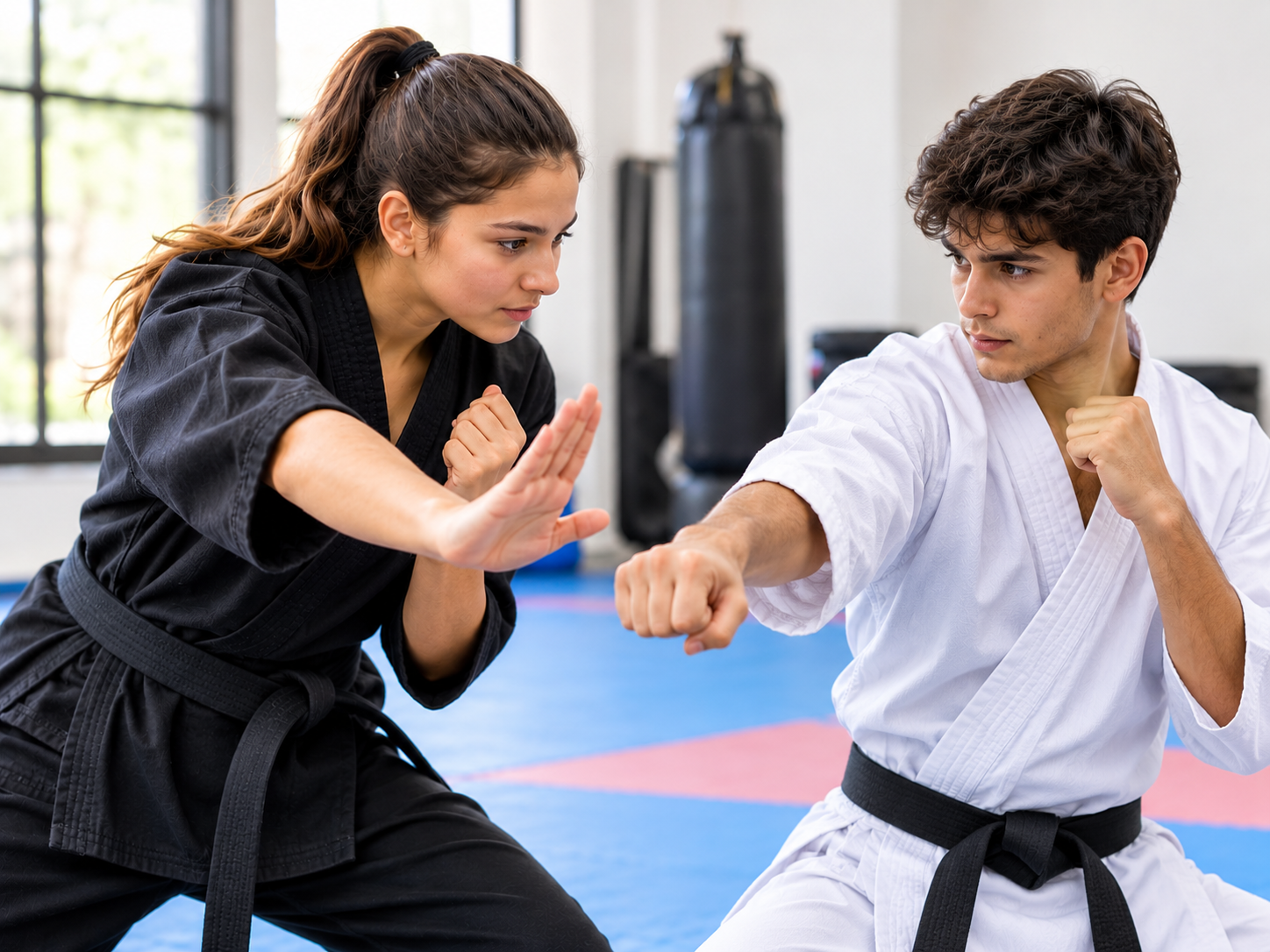
6. Understanding Basic Defensive Positions
Physical techniques have a place in self-defense, but beginners should learn them gradually and under proper supervision.
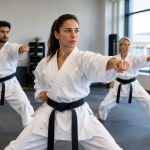
A basic defensive position helps students understand balance, body alignment and controlled movement. It should allow them to remain stable without adopting an unnecessarily aggressive stance.
Training may include:
- Learning a balanced standing position.
- Keeping hands in a natural protective position.
- Understanding basic footwork.
- Practising controlled defensive movements.
- Learning how to recover balance after movement.
These self defense basics provide a foundation for more advanced learning. It is important to remember that no technique works in every situation. A person’s size, surroundings, physical ability and the nature of a threat can all affect what is possible.
This is why beginners should avoid relying on techniques seen in films or online videos. Proper instruction allows students to practise movements safely and understand their limits.
7. Practising Calm Responses Under Pressure
Knowing what to do and being able to respond calmly are two different things. Unexpected situations can cause confusion, fear or hesitation.
One benefit of structured self defense training is that it provides a controlled setting where beginners can practise responding to different scenarios.
For example, an instructor may introduce a simple exercise involving personal space, verbal boundaries or moving towards an exit. Students can practise their response without being exposed to real danger.
These exercises can help beginners become more familiar with basic movements and decision-making.
However, confidence under pressure develops gradually. A few classes cannot guarantee that someone will respond perfectly in a real emergency. Regular practice, realistic expectations and clear safety principles remain important.
8. Choosing the Right Self-Defense Training Programme
Once beginners understand the basic principles, the next step is finding a suitable learning environment.
Not every programme follows the same approach. Some focus mainly on physical techniques, while others include awareness, movement, boundaries and practical safety habits.
When considering self defense classes, look for a programme that offers:
Beginner-friendly instruction: Lessons should start with basic concepts and progress at a manageable pace.
Qualified instructors: Teachers should explain techniques clearly and understand how to work with students at different experience levels.
Controlled practice: Physical exercises should take place in a supervised environment with suitable safety rules.
Practical learning: Training should include awareness, positioning, movement and escape rather than focusing only on fighting techniques.
A respectful atmosphere: Students should feel comfortable asking questions and learning without unnecessary pressure.
At Villari’s Martial Arts Centres, beginners can explore structured martial arts learning and develop a foundation in practical self-defense principles. Those interested in learning more can explore the available self defense classes and understand which training options suit their goals.
Why Consistent Practice Matters for Beginners
Self-defense is not a skill that can be mastered in one lesson. It involves building familiarity with movement, developing awareness and learning how to make sensible choices. Consistent practice gives students more opportunities to review techniques, correct mistakes and improve their understanding.
Beginners may start by learning basic stances and movement. As their experience grows, they can work towards more involved exercises under instructor guidance.It is also important to practise outside the training environment by developing everyday safety habits. Staying aware, setting boundaries and knowing where to seek help are useful parts of personal safety.
For those interested in expanding their knowledge, martial arts self defense can provide a structured way to explore physical skills alongside responsible safety principles.
Final Thoughts
The best place to start with self-defense is not learning how to fight. It is learning how to recognise risks, avoid unsafe situations, maintain personal space and move towards safety.
For beginners, awareness, boundaries, positioning and escape should form the foundation of their learning. Physical techniques can then be introduced gradually through safe and supervised practice.
Villari’s Martial Arts Centres provides an opportunity to explore martial arts in a structured environment where students can develop practical skills at their own pace. Whether your goal is to feel more prepared, improve confidence or understand personal safety, starting with the right fundamentals can make your learning experience more useful and rewarding.
Frequently Asked Questions
1. What should beginners learn first in self-defense?
Beginners should start with situational awareness, recognising unsafe situations, setting personal boundaries, maintaining distance and understanding escape options. Basic physical techniques can be introduced as they gain experience.
2. Is self-defense difficult for beginners to learn?
No. Most beginner programmes introduce simple concepts and movements before moving towards more advanced techniques. Progress depends on regular practice, individual ability and the quality of instruction.
3. How long does it take to learn basic self-defense?
The time varies depending on the programme and how often someone trains. Beginners can learn basic safety principles within their first few classes, but developing reliable movement and practical skills requires ongoing practice.
4. Do I need to be physically fit to start self-defense training?
No previous fitness level is usually required for beginner classes. Training can help participants gradually improve balance, coordination and general fitness. However, students should discuss any physical limitations with their instructor before starting.
5. What is the most important self-defense skill?
Awareness is one of the most important skills because it helps people recognise potential risks and make safer decisions. Avoidance and escape should generally take priority over physical confrontation.
6. Can martial arts help with self-defense?
Yes. Suitable martial arts programmes can teach students balance, movement, defensive positioning and controlled physical techniques. They can also reinforce discipline, respect and responsible behaviour.
0 Comments